Sticky Lawyers Looks Back: The Crusaders
What drives a lawyer to fight legal battles that others won't, to challenge an unacceptable status quo, or course-correct alarming trends? They may not be lucrative or glamorous causes. So why do it?
Because it's the right thing to do.
This special compilation episode celebrates the crusaders—Sticky Lawyers who aren't practicing law for a paycheck. A greater mission drives them. These are lawyers who looked at injustices and troubling circumstances around them and said, "This is wrong, and I'm going to try and fix it."
Listen in to hear from eleven crusaders fighting for civil rights, environmental protection, the rights of sexual assault survivors, election integrity, animal rights, indigenous sovereignty, rural access to justice, and more. Their individual efforts create transformation on a much larger scale. The work may never be done, and the rewards are a series of small wins on the way to lasting change.


Guest Insights
- [00:02:10] Samantha McCoy: Refusing to accept "there is no justice in the justice system."
- [00:06:13] Mark Massara: Cleaning oil-soaked beaches to championing California's environment.
- [00:10:18] Bill Marler: Going beyond winning cases to food safety law itself.
- [00:16:13] Karla Gilbride: Turning "you can't" into Supreme Court advocacy for civil rights
- [00:21:04] Lucy McMillan: Bringing the power of Big Law to pro bono cases.
- [00:24:37] Kate Knox: Defending democracy and guiding people through election chaos.
- [00:29:16] Craig Owen White: Reimagining legal education in post-Apartheid South Africa.
- [00:34:39] Hira Jaleel: Advocating and legislating for animal rights in Pakistan.
- [00:38:38] Frank Bibeau: Protecting manoomin and honoring sacred covenants with creation.
- [00:43:30] Phil Garland: Fighting legal deserts and ensuring rural communities have attorneys.
- [00:49:08] Tyrone Thomas: Translating the fight against hunger into accessible language for all.
02:10 - Samantha McCoy: Refusing to accept "there is no justice in the justice system."
06:13 - Mark Massara: Cleaning oil-soaked beaches to championed California's environmental.
10:18 - Bill Marler: Going beyond winning cases to food safety law itself.
16:13 - Karla Gilbride: Turning "you can't" into Supreme Court advocacy for civil rights
21:04 - Lucy McMillan: Bringing the power of Big Law to pro bono cases..
24:37 - Kate Knox: Defending democracy and guiding people through election chaos.
29:16 - Craig Owen White: Reimagining legal education in post-Apartheid South Africa.
34:39 - Hira Jaleel: Advocating and legislating for animal rights in Pakistan.
38:38 - Frank Bibeau: Protecting manoomin and honoring sacred covenants with creation.
43:30 - Phil Garland: Fighting legal deserts and ensuring rural communities have attorneys.
49:08 - Tyrone Thomas: Translating the fight against hunger into accessible language for all.
[00:00:09] John Reed: Hey, everybody. We're continuing our special series of episodes where we take a closer look at some of the unique attributes and mindsets that make Sticky Lawyers... well, Sticky Lawyers. Thanks for tuning in, and I hope you enjoy it.
What drives a lawyer to fight legal battles that others won't? To fight an unacceptable status quo, or course-correct a trajectory of alarming trends. These aren't lucrative or glamorous causes. So why do it?
Because it's the right thing to do.
Today's episode is about crusaders, Sticky Lawyers who aren't practicing law for a paycheck. They're driven by a greater mission.
Samantha McCoy survived a traumatic attack. When her attorney told her there is no justice in the justice system, she refused to accept it. Bill Marler learned about children who suffered kidney failure from contaminated food. To him, that was unacceptable. Karla Gilbride was told as a blind child, "You can't do this." Now she advocates for those who lack the power to advocate for themselves all the way to the U.S. Supreme Court. Phil Garland didn't just stand by and watch the number of attorneys in rural areas continue to drop. He did something about it.
These are lawyers who looked at injustices and troubling circumstances around them and said, "This is wrong, and I'm going to try and fix it."
Today, we'll hear from eleven crusaders fighting for civil rights, environmental protection, sexual assault survivors, election integrity, animal rights, indigenous sovereignty, rural access to justice, and more. Let's get into it.
Samantha McCoy was sexually assaulted in college by a law enforcement officer. The system failed her at every turn. Instead of accepting that's just the way it is, she channeled her trauma into changing laws across five states and at the United Nations.
[00:02:10] Samantha McCoy: In my junior year of college, I was unfortunately physically attacked and raped. Through that process, I made the hard decision to go forward and report to law enforcement, and unfortunately, I was treated pretty horrifically. I was blamed, I was talked down to, and in the end, I really walked away feeling as though the system was not set up to help survivors in any way whatsoever.
I was going ultimately to become a mental health therapist. I went to get my Master's in New York and completed my degree there. I got my license as a mental health therapist, and then while I was working in the field, realized that the same issues that I had experienced were continuously still happening, and it was that moment where I realized that although I can impact somebody on a one-to-one basis, it wasn't to the level where I felt like I was ultimately making a big enough impact and what was going on in the injustices that were happening.
I was a crime victim counselor, so I was in the courtroom a lot. I was counseling victims as they got on and off the stand and through that process, just the rage that I was consistently feeling when another survivor was treated or failed by the system. It was kind of that light bulb moment where I was seeing these attorneys who weren't trauma informed, who weren't trained in mental health and, um, the neurobiology of trauma and, and thinking to myself how much of an impact this could actually have if somebody who was knowledgeable about this area was actually able to be part of the system instead of just an outside mechanism to help navigate the system.
[00:04:04] John Reed: From a decision to come forward to a decision to advocate for yourself, to turn that into advocacy to others, to then be on essentially a national stage. What were you thinking at that time in terms of the progress and the advancement that you made in your own life at that point?
[00:04:24] Samantha McCoy: I didn't necessarily have a plan going into it. I just knew that I could not personally accept what people constantly told me, which was that the system is just the way that it is. It's always been this way.
My attorney, and I've said this plenty of times, like I'll never forget the day he turned to me and he said, "Well, there is no justice in the justice system." I just couldn't accept that. It was so wrong to me, and I knew that something had to change, and I didn't know what it looked like. I didn't plan to, in any way, even go into legislative advocacy, let alone law school. But it was just this progression of channeling the anger and the hurt that I felt from my own experience to really try to just make sure that people not only understood the gravity of what survivors have to go through, but also to hopefully make a long-lasting change and to get more people on board with how to fix it.
[00:05:30] John Reed: Samantha's refusal to accept injustice. Started with one moment: her attorney telling her the system couldn't be changed.
But sometimes that refusal begins even earlier. For some crusaders, it starts in childhood when they witness injustice before they even know what to call it. Mark Massaro was just a kid when he saw his ocean dying.
Mark became an environmental lawyer after a 1969 Unocal oil spill devastated California beaches he loved. As a child, he tossed hay on oil-soaked shores. That trauma became a 50-year crusade to protect coastlines, earning him the title, "a polluter's worst nightmare."
[00:06:13] John Reed: Was there a moment or an event in your early life that drew you to environmental conservation and coastal conservation in particular?
[00:06:24] Mark Massara: The big Unocal oil spill in 1969. At the very time that I was living and growing up adjacent to the ocean and learning to surf and appreciate coastal wilderness culminated in a lifelong desire to work on ocean and coastal conservation issues. We all did what we could, which was incredibly primitive. We were just tossing hay on the oil as it came ashore and were picking up oiled birds and wildlife for attempts at rehabilitation. It was very primitive. What's so ironic about oil spill cleanups today, 50 years later, is that they are still pretty damn primitive.
I signed up for the University of California at San Diego because of the adjacent beach. Blacks Beach is a world-famous surfing destination. I lucked into a fantastic school that just happened to be located in La Jolla on great beaches.
I had a philosophy professor at UC San Diego that had a really important influence on me and my thinking about how to view my interest in the coast and coastal protection as a potential career.
And at that point, environmental law was a very young discipline in legal thinking. Many of those hallmark environmental laws had only recently been enacted, and we were just beginning to think about things like the Coastal Act and the Coastal Zone Management Act. I stumbled onto that stuff and really began to appreciate how those legislative, uh, opportunities could really facilitate my own coastal protection goals and frankly, my own desire to live and work and play in the coastal zone for my career.
There were very few lawyers at that time that would even be characterized as environmental lawyers. Now we have coastal zone lawyers, and we were inventing this as we went.
[00:08:55] John Reed: So, at the University of San Francisco School of Law, where you attended law school. Were these classes being offered, or were you self-fashioning an environmental law curriculum for yourself once you got beyond the core classes?
[00:09:10] Mark Massara: The closest we ever got to anything related to the coast was your generic law school property law course and an introductory environmental law course. There were very few lawyers at that time that would even be characterized as environmental lawyers. Now we have coastal zone lawyers, and we were inventing this as we went.
[00:09:42] John Reed: Mark witnessed environmental destruction as a child and made it his life's work to prevent it from happening again. His awakening was witnessing the oil spill, but for Bill Marler, the Awakening came later when he realized winning cases wasn't enough.
Bill Marler represented victims of the 1993 Jack in the Box E. Coli outbreak— nearly 700 sickened, four children dead. He won his cases, but companies kept poisoning people. So, he made it his mission to change food safety law itself.
[00:10:18] Bill Marler: The Jack in the Box outbreak was the first major E. coli case and really the first major foodborne illness case that really sort of blew up. It's not that there hadn't been foodborne illness cases, but that just sort of the media coverage and everything and the size of it. There were nearly 700 people sickened. Mm-hmm. Four children dead. Mm-hmm. There were about a hundred kids who were hospitalized with acute kidney failure.
Jack in the Box, we uncovered that they were knowingly undercooking their hamburgers in violation of Washington state law. And the meat that came from a variety of suppliers was highly contaminated with this pathogenic bacterium, E. coli O157H7.
The Washington State Department of Health was pretty sophisticated, and they were paying attention to these E. coli cases linked to ground beef.
There had actually been a small one linked to a Mexican restaurant in eastern Washington, and so in order to combat it, they decided to raise the food code temperature for internal temperature of hamburger from 140 to 155 to assure that there was a kill step that was going efficiently kill the bacteria. But Jack of the Box simply—and we were able to document this through discovery—they knew about the change from 140 to 155. But because they had restaurants in multiple states that didn't share the increased requirement, they chose to essentially ignore it.
[00:11:55] John Reed: Besides its notoriety and certainly the great result that you secured for clients, what was it about that area where you said, you know what, this is what I'm going to do going forward? I'm going to devote my practice, or at least much of my practice, to food poisoning and food safety cases.
[00:12:12] Bill Marler: What happened was most of the Jack in the Box cases resolved in 1995, early 1996. I think I had only had one case left in 1996, and I was doing other personal injury cases, away from food poisoning cases. And then there was another E. coli outbreak linked to Odwalla apple juice, and it was a smaller outbreak, about 80 people.
One child died, about a dozen people with acute kidney failure, and I started getting referrals from lawyers from all over the western United States. At that point in time, I needed some help, and I hired away from the firm that had defended Jack in the Box. I hired away one lawyer, an associate, to come work for me. And then when the Odwalla cases were winding down, he and I started talking about, gee, wouldn't it be interesting if we focused on this? I had done well in Jack in the Box and Odwalla, so I could bankroll the firm for a while. And we started Marler Clark completely focused on foodborne illness cases, you know, and that's essentially what we've been doing since 1998.
[00:13:32] John Reed: You could have just handled cases. Somewhere along the line, you made the decision to also become an advocate to change the policy, to try to influence government standards, and essentially seek to put yourself out of a job if you were successful, ideally.
[00:13:49] Bill Marler: There's litigation that occurs that changes corporate behavior. There's lots of examples of that. And I think after the Jack in the Box case and the Odwalla case, I thought that somehow kind of miraculously companies would stop poisoning people.
But it became pretty clear to me that that wasn't really going to happen. And by then, I had represented dozens and dozens of little kids, primarily, who, through no fault of their own, ate a food item that caused them to need kidney transplants or suffered brain injuries. And by then, you know, I had two little kids of my own, and I said to myself, this could just happen to me just as easily as it happened to these other people.
And so, I started getting offers to speak at food safety conferences and sometimes by corporations who wanted to hear kind of my side of the story, to the point now, especially after Covid, probably about a quarter of my time I spend talking to companies about why it's a bad idea to poison people, and I've also spent a lot of time advocating for changes in food regulations.
I petitioned the government to expand the definition of what's considered an adulterant in food. You know, I was, I I'll say instrumental in helping move the Food Safety Modernization Act through Congress and to get it signed by President Obama in 2010, and I'm still advocating. So, I guess it became less of a job and more of a, you know, it's I guess a difference between a vocation and an avocation.
[00:15:37] John Reed: Bill's awakening came when he realized litigation alone wouldn't protect kids from contaminated food. He needed to change the system. That realization—that individual cases aren't enough—drives every crusader.
Karla Gilbride has argued multiple cases of civil rights violations at the highest level: the U.S. Supreme Court. Her passion for representing the underdog was shaped early, and her lived experience as a blind person gave her, in her words, “fire in the belly” to fight injustice.
[00:16:13] Karla Gilbride: I have always, from a young age, been very passionate and very angry about any sort of injustice or what I sort of perceive as bullying, somebody taking advantage of being stronger, of having more power, and using that power to bully or abuse somebody else. So, what motivated me to get a law degree and to become a litigator was wanting to remedy those sorts of imbalances and that sort of bullying. And so, I've always had a passion for sort of representing the underdog, the individual, the worker, the person who's experiencing discrimination. And so, I have done some work with plaintiff's law firms, but for the most part, where I've been able to channel those passions has been working for nonprofits and doing law in the public interest.
[00:17:02] John Reed: I talk to guests, and they tell me either they came out of the womb arguing and ready to go into litigation or that they came to it later. You sound like more of the former than the latter. Maybe your parents or somebody said, "Oh, yeah. You're going to be a lawyer. You're going to be a litigator."
[00:17:20] Karla Gilbride: I definitely got that from my parents as a kid. And I think what I understood lawyers to be, based on the way my parents described it, was people who liked to argue. And I definitely fit that description. I always enjoyed both the written word and the spoken word, and using words as my tools. Socially, talking to people, socializing with friends.
But also, as a totally blind kid, I didn't have a lot of opportunities to compete in sports with my peers. So, using words were sort of my way of competing. So, I did the speech and debate team in high school. I did a lot of public speaking. I also joined the mock trial team, and I got to play a lawyer doing examinations of witnesses. So even as a teenager, I was definitely testing those waters of what it might be like to be a lawyer.
[00:18:09] John Reed: Excuse me, for what may be kind of one of those duh questions, but did your lived experience with blindness, did you have your own experiences of that imbalance or being bullied? I hope not. But that kind of unfairness also fueled your interest in what you do now.
[00:18:27] Karla Gilbride: I definitely did have personal experiences. I, for the most part, had good experiences with my peers, but sometimes kids are mean to each other, and I certainly experienced a little bit of that growing up. But I think what was more formative was with adults, when I experienced teachers telling me you can't do something.
Sometimes in gym class, being told, "Oh, it's too dangerous for you to do this activity. You should sit this out." So, being excluded or told that something was off-limits to me. That sort of unfairness very much rankled me as a kid. The same thing would happen later when I was looking to do volunteer activities or my first summer jobs. Getting questions about, well, how would you do that as a blind person? Was my first brush with the sorts of barriers that people with disabilities experience in the workplace. And I think that also gave me some of that fire in the belly to go ahead and be a lawyer and advocate because I knew what that felt like to be told, "No, you can't do something."
So, I am currently working as the Deputy Director of the Public Citizen Litigation Group. Public Citizen is a public interest organization that has largely worked on consumer and public health and safety issues, and the litigation group has done a lot of work on government accountability and government transparency, as well as corporate overreach. And so, it seemed like a good home for me with my public interest law background. And especially given some of the things that are going on with the current administration, I wanted to be at a place on the front lines of making sure that the government doesn't abuse its power.
Because to my theme from earlier about people abusing their power or something that makes me very angry, and that makes me want to push back. I see a lot of that happening right now with this administration, and so Public Citizen is a great place to be standing up for the rule of law, and that's what I'm trying to do.
[00:20:32] John Reed: Karla turned being told you can't into a practice fighting for those who've been told the same thing. Her fire burns in nonprofit public interest law, but crusading isn't limited to nonprofits.
Lucy McMillan leads pro bono efforts at Arnold & Porter, a billion-dollar law firm with 1,000 lawyers. She explains how impact litigation can change lives for thousands, and why big law firms can be powerful forces for good.
[00:21:04] Lucy McMillan: I began my career in education law, so I always have an education matter. It's very important to me. I've had dozens of special education hearings throughout the course of my career, and advocating for appropriate services and placements for students with disabilities. I've also been involved in litigation concerning access to remote learning during the pandemic for low-income students who didn't have access to broadband or remote learning devices. And I'm also involved in work around discrimination and hostile environments in school districts.
Outside of the education area, I work on civil rights matters. I recently represented a mother whose newborn baby was removed from her custody in an equal protection and due process case against New York City's administration for children's services.
I represent families separated at the border in damages lawsuits. I've done unemployment hearings and asylum cases. It really runs the gamut, but with a general focus on education and civil rights.
[00:22:02] John Reed: There's a term that's used, that the firm uses on its website, talking about the pro bono practice: impact litigation.
[00:22:09] Lucy McMillan: It is actually fairly hard to define in the sense that I would say all of our cases have an impact, but impact litigation is generally defined as something that impacts a large amount of people. So, it might be a certain legal principle or a right that you're advocating for in the courts that can then be applied to a large group of people.
[00:22:29] John Reed: This is the 50th anniversary of the famous U.S. Supreme Court case of Gideon v. Wainwright. And there's an Arnold & Porter connection. So that certainly was an impact. Maybe you could talk about that for a minute.
[00:22:42] Lucy McMillan: Gideon vs. Wainwright was really the representation of one individual person, but it did have just this wide-ranging impact. In 1963, the United States Supreme Court called up one of our founding partners and asked him to represent Clarence Earl Gideon, who was an indigent defendant in a criminal case.
And with Arnold & Porter's representation, the Supreme Court decided this landmark decision that forever cements the right to counsel in a criminal case. And that has far-reaching consequences for criminal defendants and the criminal law and criminal practice.
[00:23:18] John Reed: We hear a lot about access to justice, access to the legal system. Give us a broader picture of what legal services, the need for assistance for access to legal justice, what that looks like?
[00:23:32] Lucy McMillan: I think there's an unending need for pro bono. There can never be enough pro bono lawyers for all of the cases out there.
There are lawyers needed for unemployment benefits, veterans’ benefits, education, housing, all the ways that many, many people interact with the legal system on a daily basis. I am really at the moment just thinking about cities. But if you then think about all the rural areas across the country where there's not as many lawyers, there are so many people who could benefit from pro bono representation. And if any lawyer in the country wanted to do a pro bono case, there was one out there for them.
[00:24:09] John Reed: Lucy shows us that resources matter. A billion-dollar firm can leverage its power for the powerless. But sometimes crusades require going beyond familiar legal systems.
Kate Knox practices election law, fighting to save democratic principles in an era when voting rights are under assault. She thrives in chaos that drives others away, giving people a roadmap when they need guidance most.
[00:24:37] John Reed: What do you really love about what you do? What are the aspects of your practice that you enjoy the most?
[00:24:44] Kate Knox: So, I enjoy on the lobbying side, which was very hard during COVID, I really enjoy the relationship part of the practice. I really enjoy just being in that atmosphere where there's a lot going on is a little bit chaotic. It's a lot of people, but there's a ton of energy in the room, and I am definitely a person that feeds off energy.
And I also love about lobbying that it requires a ton of creativity and a lot of people, if they come to the State House, it drives them mad. Because to them it's just chaos. There's no offices in Maine, there's very little staff. It's catches catch can, I'm grabbing this person in the bathroom, I'm brainstorming something in a corner and then running over to grab someone else. I personally have always found that very energizing. I work better in a group, in a team, in that kind of an atmosphere. I thrive in that. It can also be exhausting, but it's invigorating.
And on the election side, those laws are so complicated. It is a nice feeling to be able to really understand something that not many people understand, because you can often just clarify things for people quickly.
When they call me, they're either panicked because they've done something wrong or they want to get involved, but they don't really know how to get involved. I like that feeling of being able to say, I can be your roadmap. I know how to do this, and you can do it. You just have to follow my directions, which they don't always do,
I think it ties back to that social work, wanting to be of service and helping somebody through something difficult. And I will tell you that about half of my election law work is dealing with people who are already in trouble. They've gotten a call, they've done something wrong, and those calls are very scary.
There are some criminal penalties, and the financial penalties are very significant, and so there is something about walking with somebody in that space that I've always been comfortable with. People in distress don't necessarily scare me, if that makes any sense. So, I'm able to say to somebody, it's going to be okay, here's what's likely to happen, here's what I can do. Being able to say to them, I know how to deal with this, and I'll help you deal with it.
[00:27:24] John Reed: Stating the obvious, for a moment, that the volume and the temperature have been turned way up over the last. Six plus years vitriol, acrimony, intimidation, violence, unfortunately. How has the election law landscape changed in Maine, and how has your work changed in relation, I mean, you mentioned that election integrity, the substance of that has changed for you, but, in terms of the landscape and the practice, how have you had to adapt to what you've experienced?
[00:27:56] Kate Knox: Yeah, it's very different than it used to be, people use this term all the time, but it's very divided. It's very partisan. Some of the ads that I review now, nobody would've ever have dared to put those ads on 10 years ago. Just the level of confrontation to the other candidate, the things we say about other candidates.
The conversations that I have to have with my own clients now about libel and slander, defamation, to say, look, you're saying some pretty nasty things about this person, and when you do that, you open yourself up to a different kind of potential liability and backlash. I never had those conversations 10 years ago. Never.
[00:28:54] John Reed: Kate is a champion for democracy. Some crusaders take their mission beyond our borders entirely. Craig Owen White takes his mission International.
Craig reimagined how American lawyers teach Black lawyers in post-Apartheid South Africa, helping build a legal framework for Black-owned businesses.
[00:29:16] Craig Owen White: The ISLP is a nonprofit based in New York, but it was started by two senior lawyers out of DC, designed basically to help support the rule of law and equitable economic development around the world. Akin to Doctors Without Borders, but lawyers. And from that simple sort of vision, they began recruiting senior and retired lawyers from many of the major law firms in the United States to provide pro bono services to governments and also to NGOs around the world.
[00:29:51] John Reed: Where in your legal career did you come across the ISLP?
[00:29:54] Craig Owen White: Just a sense of curiosity. I was reading—probably about 10 or 12 years ago, 15 years ago maybe. I think I was a young partner at the time—but I was reading my alum magazine from UVA, and there was a story about the ISLP and one of our UVA faculty members was talking about a project that he had participated in in South Africa along the lines of the rule of law. And I called him up and said, can I be of assistance? I can do desk research and that sort of thing.
And he was very kind. He invited me to go with him to South Africa, but to meet with the Black Lawyers Association down there over this course that they were teaching called the Commercial Law Training Course, which was designed basically to build the skillset of lawyers of color in South Africa in the wake of apartheid.
If you recall, Blacks in South Africa couldn't engage really in any meaningful economic. Activity. So, there were no Black owned businesses. Now, in the post-apartheid era, the decision was made to try to build capacity of Black lawyers to be able to help and support the creation of Black economic institutions and businesses.
I went with them and I met some people there and I. Sat in on the course that was being taught, and he then ultimately asked me to be involved as an instructor, and I did that for a couple years. Then, a few years later, they asked me to be on the board of the ISLP. I went on the board, and I started getting more and more involved.
I had quite a bit of background with respect to corporate governance and also economic development, so I was able to use that skillset in redeveloping and reimagining the course that we were connecting with the South African Black lawyers.
[00:31:45] John Reed: What did the program look like when you made your first trip to South Africa with your former professor?
[00:31:52] Craig Owen White: All the lawyers who were going over were incredibly, incredibly well-intentioned and incredibly bright. I mean, these were the best corporate lawyers in the United States, and they were taking that knowledge and imparting it over in South Africa.
The problem was that there was a disconnect, and it assumed that people had been basically practicing law and engaged in business at a very, very high level for a number of years. And that just wasn't the case. The recipients were incredibly bright lawyers over in South Africa. These were just incredible, incredible lawyers, but they had never been exposed particularly to Western style of capitalism and how business is done and what it's all about.
I realized that what we needed to do was start at the very beginning. If you want to become an expert at something, the best way to do it is to teach. Because instead of doing a data dump, you have to distill what are the important elements. You only have a certain amount of time to try to deliver this, and so you can't deliver everything at one time. You have to teach the person how to build a framework, and that's where I started understanding that's how you have to approach practicing law if you want to be effective.
The other element is you have to make sure that you're actually communicating to the person you're teaching and examples that they can relate to. I would spend a lot of time learning elements of South African culture, of Southern African culture, and incorporating those into the teaching to make the point. Suddenly you'd see the eyes just brighten up and the light go on, and, they realized that they knew more than they thought they did because the general principles that we talked about, particularly about risk, identifying risk, pricing risk, allocating risk in a business deal, and then why we're doing what we're doing in the business deal to document it and enforce it, but also the responsibility of a lawyer to oversee the profession, to make sure that it remains ethical and honorable, , and that people can rely upon the law.
[00:34:11] John Reed: Craig proves business law can advance social justice, if you're willing to reimagine what business law means. Now we turn to crusaders fighting for those with no voice at all.
Hira Jaleel is Pakistan's first accredited animal law lawyer. She has created legislation to protect animals— companion animals to wildlife— in a country where animal protection laws haven't been updated since 1890.
[00:34:39] Hira Jaleel: Yeah, the state of animal law in Pakistan, unfortunately, is not great. The major animal protection or anti-cruelty law in Pakistan, the main piece of legislation that exists in the country, is from back when Pakistan was a British colony, so it's from 1890, and Pakistan gained independence in 1947.
So even in terms of how far that law goes, how far back it goes, it's still a really, really old, like ancient piece of legislation. It's very bare minimum. It only covers domestic and captured animals. And it has these really bare-bones protections, really basic protections.
[00:35:13] John Reed: Educate me, if you will, on cultural influences, animals in society from companion animals to wildlife tourism, but I wonder if you can give us kind of some specific examples.
[00:35:26] Hira Jaleel: I think this is so important, especially in the field of animal law, to really be cognizant of what context you're working in. And I think the legal issues that you work on can vastly differ depending on the culture of the place you're in.
And by way of example, one is dogs. In Western society, generally, you know, dogs are considered a part of the family. They're beloved companion animals. If the law protects no one else, you can be fairly sure that it'll protect dogs, right? In Pakistan, it's actually not the case at all because Pakistan's a Muslim majority country. So, the state religion is Islam, so it's also an Islamic Republic. 97% of the population is culturally and religiously Muslim. So, there's this conception, and I don't necessarily agree with the conception, but there, it's a pretty widespread conception that dogs are considered unclean in Islam, and so people just don't like keeping dogs as pets in the house.
Even if that was true, that shouldn't transmit to cruelty against dogs. But unfortunately, we see that that ends up being the case where a lot of dogs are homeless. They're on the streets. And those dogs are treated quite horrendously, to be honest, both by the state and by people generally. And of course, like there's some legitimate reasons to be wary because, of course, you know, when you have so many dogs in the street, there's going to be incidents, there's going to be dog bites. Um, dogs can be carriers of rabies.
So those are very real concerns. But how the state has historically handled it has been to shoot or poison those dogs, which are really barbaric ways of killing them. And it's usually done very surreptitiously in the middle of the night when there are fewer people around or fewer people to protest. And so that was something that I actively litigated and try to get the law changed on that front.
And another, I think, major cultural issue in Pakistan that again, might not necessarily, I think universally, this is becoming more and more of an issue that people are paying attention to. But the issue of Halal slaughter, because again, it's a Muslim majority country, and animals have to be slaughtered in a certain way, as the religion allows.
Funnily enough, in Pakistan, there's not a lot of transparency around how farm animals are being raised and slaughtered. And there's like this default presumption that because the country's an Islamic republic, everything's Halal and everything's great. There’re quite a few welfare considerations that have to be accounted for, and I don't think that's being done in Pakistan because there's this presumption that just because it's Halal, it's all okay.
And of course, everyone's going to be following the right way of conducting the slaughter, which isn't necessarily true. So, there's like that information gap, and there's opacity around what's really happening behind the scenes to farm animals that I think is something that some light needs to be shed on.
[00:38:15] John Reed: Hira is inventing animal law in Pakistan, updating laws untouched since the 19th century.
Frank Bibeau also pioneers new legal frameworks, but his crusade goes deeper than legal innovation. It's about honoring sacred covenants, fighting for manoomin—wild rice central to the Anishinaabe people.
[00:38:38] Frank Bibeau: Manoomin is what is now understood to be called wild rice by the mainstream people. Thousands of years ago is what I'm guessing. But part of our migration and creation stories, the Chippewa, the Ojibwe, and Anishinaabe, we migrated through the Great Lakes, and we were looking to go to where a prophecy told of where the food grows on the water. And ultimately, what was probably hundreds of years of journey for all I know, and they got to Lake Superior.
Lake Superior is the gateway to northern Minnesota, where I live, and that's probably the greatest wild rice area in the world. That food has sustained us forever, through the long years. Wild rice is probably, as I said before, the most central important part of our culture because it also has us doing activities 12 months out of the year to prepare for wild rice season. It might be mending your canoe or building a new canoe. It might be scouting for other wild rice, traveling through areas that you haven't been in. And so wild rice compels you to engage in activities all the time, see what's happening in your environment. And so, what we call our first treaty or covenant with nature as human beings, and scientists talk about this as well, humans are one of the last species to appear on the planet Earth.
From our perspective, when we came, we were spirits, we were wisps of smoke, essentially, and we petitioned the Creator to talk to creation to see if it was okay if we came and relied upon them for our sustenance so that we could have a corporal physical being and have a life here. And the Creator talked to creation, essentially everybody, and they said, Yes, obviously we're here, and we have a covenant, they protect and nourish us, and we're supposed to protect them as well. And so, we've been, I guess, privileged to know that we're part of creation. And that we belong to creation, not that creation belongs to us.
I have old pictures where my father was, like, in 1955, a black and white photo, he's out in a canoe harvesting rice. I've got pictures of my grandfather processing his rice. When we weren't living in Minnesota, my grandfather would send us wild rice to make sure we always had it. It was always part of our lifestyle.
[00:41:03] John Reed: Then, along comes Enbridge, and Marathon, and the Line 3 Sandpiper Pipeline. What threat did this development, this pipeline, pose to manoomin?
[00:41:16] Frank Bibeau: Oh, probably many threats. Ball Club, where I spent most all my life, is on Highway 2 in Northern Minnesota on Leech Lake Reservation. And a half a mile from my house, there are now seven pipelines that are Enbridge that run, you know, east to west from up in Canada all the way through to Superior and then beyond, Line 5, and other places. So, in the place where I live, and, you know, when you're young, you don't always think about this. In 1991, I believe, the largest inland oil spill in North America occurred in Grand Rapids, Minnesota.
It was pre-Internet for the most part, and so, for a long time, people thought the Kalamazoo spill in 2010 was the largest inland oil spill in North America because the 1991 spill wasn't on the Internet, and we had to go through the work of getting it on the Internet to make sure it was being looked at correctly.
That was 1991. In 2003, I think it was, there was a massive fire rupture in Cohasset, Minnesota, which is between Grand Rapids and Ball Club, and they burned that off to try to protect it from going into the Mississippi River.
In 2007, to the west in Crookston, they had an explosion there where I think three people died in that explosion. When you fast-forward to 2016, we had the Husky refinery catch fire on Lake Superior. You have all of this dirtiest fuel, raw material, going up in flames right on the edge of Lake Superior.
This is just in the state where I live. This is just in this segment where the tribal people live. This is modern times.
[00:42:59] John Reed: Frank's crusade isn't just environmental law. It's protecting his people's covenant with creation itself, using legal innovation to defend what's sacred.
While some Crusaders fight international corporations or pioneer new legal theories, others fight a quieter battle against legal deserts. Phil Garland practices law in a rural community, but he is also fighting to ensure that there are other attorneys representing other rural communities.
[00:43:30] John Reed: This concept of a legal desert, large populations, and even whole counties without lawyers, what effect is that having on Garner, on Hancock County, and other rural communities?
[00:43:42] Phil Garland: I think it's negative because the people aren't here, the lawyers aren't here. I think it hurts us a lot, too, because the people expect to have somebody here that they know and can trust just by way of knowledge.
I think we're down in Iowa. I think we just have one county that only has one lawyer. But there just isn't the availability of lawyers. Plus, I think my generation was much more involved in community activities and boards and things of that nature. I just don't believe that that's out there today like it was, so it affects people not having somebody there that they know and trust, and that's what small town people want, and somebody that they know. They have to go to different areas to get that help. Sometimes it's not the best help, especially if they're going online. And I think a lot of the volunteer work, especially volunteer legal work for nonprofits and things of that nature, has really weakened over the years.
[00:44:41] John Reed: So, the whole community suffers, not just those with legal issues. But of course, you've been trying to remedy that. You've served as the chair of the Iowa State Bar Association's Rural Practice Committee, and you helped start the Rural Practice Program. Can you tell us about that?
[00:44:58] Phil Garland: Frank Carroll was the president of the bar approximately 10 years ago, and it was kind of funny because Frank asked me to head up the committee, and what he really was looking for at that point was to see just where the practice of law would be in rural Iowa within 10 years.
I somewhat jokingly said to him, Frank, all we have to do is get in a car and drive through Southwestern Iowa, and I can show you what it's going to be like. Unfortunately, that was a little bit flippant on my part, but that's happened throughout our state, where we've seen the decline of legal representation in small towns.
And depends on your definition of a small town, but there are even some towns that are four and 5,000. One of my friends goes down one day a week with somebody from her office in a town that has attorneys. She has kind of a satellite office there for one day out of the week. I t's amazing how much business she has just developed there.
So that was the thought that Frank had is I think he was hoping to find a way to stop that. We eventually worked our way into a program where we wanted to establish clerks that could go and work for a lawyer in the summertime and then be a little bit more road-ready once they were graduated.
And unfortunately, trying to find a place for a law student to live for two or three months and work them in has been difficult. I'd never had a law clerk. I had three, and I'm sorry I didn't have them years ago because it's a great relationship. I still have a good relationship with the three clerks that were here.
[00:46:34] Carrie Rodriguez: Garner is a very welcoming and inclusive community, and I've never thought about leaving. You know, some of the great things about working in a small town is that work-life balance.
I have three young kids. We have activities, we've got other things going on, and being able to work this eight to five job and go home at night, I think it's really important because I do keep, try to keep work life a little bit separate so that I can come back in the morning and feel like a hundred percent ready to hit the job again.
I think the other really big thing is the fact that we really have a chance to get to know our clients. And that's important to me, and it's important to be able to know who you're representing and advocating for.
[00:47:22] John Reed: Let's talk about the economics with law school debt and the price of a practice. If you were going to sell it to the extent that that you want to reveal the information, how have you structured this succession between your practice, Phil, and onto Carry?
[00:47:38] Phil Garland: I probably was aware of student debt before 99.9% of the country. We had a couple of students who went to Drake to undergraduate and then to law school, and this was back in the early 2000s, and they had over $250,000 in debt, which I found just staggering.
I looked at how I started. I had the GI bill. I got out of law school with no debt. When I came up here to open my office, my medical insurance was like about $130 a month, and that included pregnancy coverage. I think my encouragement to Carrie was basically when I walk out the door, the business is hers. She does have to get rid of my old files, which is a pretty big bargain for me. But I don't intend to charge anything for the practice. That's been sort of our contract.
[00:48:31] John Reed: Phil Garland has practiced in rural Iowa for nearly 50 years, but he didn't just serve his community, he's fighting to eliminate legal deserts entirely, creating programs, recruiting young lawyers, building the next generation. That's systemic crusading.
Tyrone Thomas also fights an invisible crisis. He awakened to food insecurity in his own childhood. That Revelation led him to found A Conversation For Six, a nonprofit lowering barriers to the fight against hunger by educating people in accessible language.
[00:49:08] Tyrone Thomas: My mother was the sole caregiver for myself and my two older sisters. We grew up in West Philadelphia. My mother is a child psychologist who works primarily in the nonprofit sector, which are, are not the most well-paying jobs. Budgets were tight and there were times where we knew that we always had enough to eat, but that she would skip meals and do other things and cut other corners for herself so that we did.
The reason why I think I was never able to put a fine point on it as a child is because we were not the poorest family in a middle-class or upper-middle-class neighborhood—quite the opposite. We were in a working-class enclave that was surrounded by a much more lower-class neighborhood. And so, we got to witness people who were much more food insecure in a very visible way.
We oftentimes individually or through community organizations or through our church, we were oftentimes gathering cans and doing food drives for those other neighborhoods. Mm-hmm. So, you didn't really get it until you start to look at and think about the definitions and think about where the baseline should be for everyone.
[00:50:19] John Reed: Let's get to it. Tell us about Conversation For Six and how you got there.
[00:50:24] Tyrone Thomas: It's such a critical fundamental need—food security for everyone. And the food insecurity epidemic is really a human rights epidemic. There are a ton of organizations doing amazing work in what I would call the direct-action space, right? They're directly serving the people who are food insecure. But when I try to evangelize casually to people I interact with, one of the things that I keep running into is this refrain that it's confusing.
They have gone to X or Y organization's website, or they dialed into some webinar and what they heard were a lot of acronyms for programs and government agencies that work on food security that were undefined or undefined, and a lot of academic concepts within the hunger space that we're also undefined or undefined.
It's like listening to a foreign language, right? We start to turn off. Some of us will start to jot all those things down when we're really, really passionate about it, and then go learn. But if we only focus our efforts on converting the most diehard people, we lose out on a very, very large segment of the population who could potentially really help the organization move forward.
I think that there is no lack of passion within the fight to eradicate hunger, but at times, and this is by no means universal, at times, there can be a marketing problem. What Conversation For Six is, is really helping with that marketing problem. We are translating. In some ways, and through definitions and through explication of some of the fundamental concepts, some of the building blocks, we are translating a lot of the copy that's coming out of certain other members in the anti-hunger community. For a broader audience, I'm just trying to sort of create this G League, if you will. Bring people in.
The idea of this unserious presentation came from The Art of Eating by MFK Fisher. Definitely one of my favorite books, one of the ones that's always sitting on the bookshelf, and there's a quote that I've always loved: "The perfect dinner party can be achieved with six people. Usually, six people act as wets or goads in this byplay and make the whole dining experience more casual, if perhaps less significant."
And, and there's a discussion about how it looks with two people and how it looks with a larger amount of people. And the idea that larger amounts of people, if you can envision this large table, will break off into subgroups. Popping into my head as I was thinking about what we're trying to do here and how we want to explain it, which is where the name A Conversation For Six came.
[00:53:02] John Reed: Tyrone Thomas's awakening came when he realized his childhood struggles had a name: food insecurity. Now he translates complex anti-hunger language so everyone can understand and act. Knowledge is power. Individual action creates movement. That's what every crusader in this compilation has shown us.
We've heard from 11 lawyers who give a voice to those who lack access to justice or the privilege or status to be heard. The result of their individual efforts is a transformation on a much larger scale. For some, the crusade is the job. For others, it's an off-the-clock pursuit. The work may never be done, and the rewards are a series of small wins on the way to lasting change.
What can we learn from them? All of us, not just Sticky Lawyers, possess the strength and resolve to be more than bystanders to unfairness, intolerance, and mistreatment.
We have within us the power to change the seemingly unchangeable, not just for ourselves, but for—maybe especially for—the benefit of others.
I'm John Reed. And until next time, you've been listening to Sticky Lawyers.

Corporate Counsel & Food Insecurity Advocate
Tyrone H. Thomas, Jr. is a proven people leader, and seasoned legal/strategic business advisor. He currently serves as Vice President and Deputy General Counsel at Invenergy, a global leader in sustainable energy solutions, where he leverages his broad experience to provide effective counsel on a wide range of business, legal, administrative, crisis management, and risk management issues.
Tyrone is also the founder of Conversation for Six, a nonprofit organization focused on expanding ongoing discussions about food insecurity.

Conservation Development Lawyer
Mark Massara is a surfer, lawyer, and coastline conservationist who first gained a reputation in environmental communities when he won a $5.6 million Clean Water Act enforcement, the second largest ever collected. Since then, he has fought on behalf of the Surfrider Foundation, Sierra Club, government agencies, non-profits, and private sector enterprises to protect, restore, and develop campaigns to achieve coastal conservation for future generations and provide amenities for wildlife.

Partner-in-Charge, Hahn Loeser, Cleveland
Craig Owen White serves as Partner-in-Charge of Hahn Loeser’s Cleveland office and guides established and growth-oriented companies through mergers, acquisitions, divestitures, enterprise governance, and financing and licensing issues in the United States and abroad. He has particular experience serving as primary outside corporate counsel to business enterprises.

Election Lawyer & Lobbyist
A shareholder at Bernstein Shur, Kate Knox is among the most highly regarded lobbyists and election law attorneys in Maine, guiding clients through the complex reality of elections and public policy. She’s advised candidates from the school board to the governor’s office, and helped pass ground-breaking legislation to establish ranked-choice voting in Maine and the state’s first-in-the-nation ballot initiative legalizing same-sex marriage.

Food Safety Lawyer
William (Bill) Marler is America's most prominent foodborne illness lawyer and a major force in food policy in the U.S. and worldwide. He has represented thousands of individuals in claims against food companies whose contaminated products have caused life-altering injury and even death. Bill's advocacy for a safer food supply includes petitioning the USCA to better regulate pathogenic E. coli, working with nonprofit food safety and foodborne illness victims' organizations, and helping spur the passage of the 2010-2011 FDA Food Safety Modernization Act.

Small-Town Attorneys Serving in a Legal Desert
Phil Garland and Carrie Rodriguez are not only lawyers in the Garner, Iowa community — they are lawyers for their community. For more than four decades, their firm has represented clients in real estate, bankruptcy, social security, personal injury, family law, estate planning, criminal law, and general litigation. Deeply committed to ensuring small towns have lawyers to serve them, Phil has chaired the Iowa State Bar Association's Rural Practice Committee for several years.

Teaching Fellow & Adjunct Professor at Lewis & Clark Law School
Hira Jaleel is a groundbreaking pioneer in Pakistani Animal Law. After earning an LL.B (Hons.) from Lahore University of Management Sciences, she obtained an LLM in Animal Law from Lewis & Clark Law School as a Fulbright Scholar. Hira is an Animal Law Teaching Fellow and Adjunct Professor at Lewis & Clark Law School, where she teaches Food Law and Aquatic Animal Law. Hira was previously a litigator advocating for animals, notably against the culling of street dogs and wild animal possession in Pakistan, where she has also drafted and reviewed groundbreaking provincial animal welfare legislation. Her writings on animal welfare are published in various international news outlets.

Tribal Lawyer
A self-described free-range tribal attorney, Frank Bibeau is a member of the Minnesota Chippewa Tribe, is enrolled at the White Earth Chippewa Reservation, and lives on the Leech Lake Chippewa Reservation. After earning his law degree, Frank worked extensively with Chippewa treaty rights, civil rights, and sovereignty law on and off the reservation. More recently, Frank has worked closely with the Center for Democratic and Environmental Rights to develop the "Rights of Manoomin," a Rights of Nature-based law for the White Earth Reservation to protect a native species of wild rice that holds special cultural and environmental significance to the Chippewa.

Pro Bono Lawyer
Lucy McMillan is a full-time pro bono professional in charge of managing Arnold & Porter's global pro bono program. Ms. McMillan is responsible for furthering the Firm's relationships with legal services organizations and not-for-profits, developing and securing pro bono matters for firm attorneys, and organizing and developing internal and external pro bono training and programs. Ms. McMillan also handles and supervises individual pro bono matters.

Attorney, Public Speaker, and Legislative Advocate
Samantha McCoy is an appellate attorney in the Austin, Texas, office of Lucosky Brookman, focusing on complex commercial and insurance coverage issues. Also a licensed mental health therapist and public speaker, Samantha advocates before federal and state legislatures to close all gaps within the judicial system so survivors of sexual violence are treated in a dignified and trauma-informed manner. She has successfully lobbied for and passed five laws in four states and one United Nations Resolution, strengthening survivors’ rights and protections.
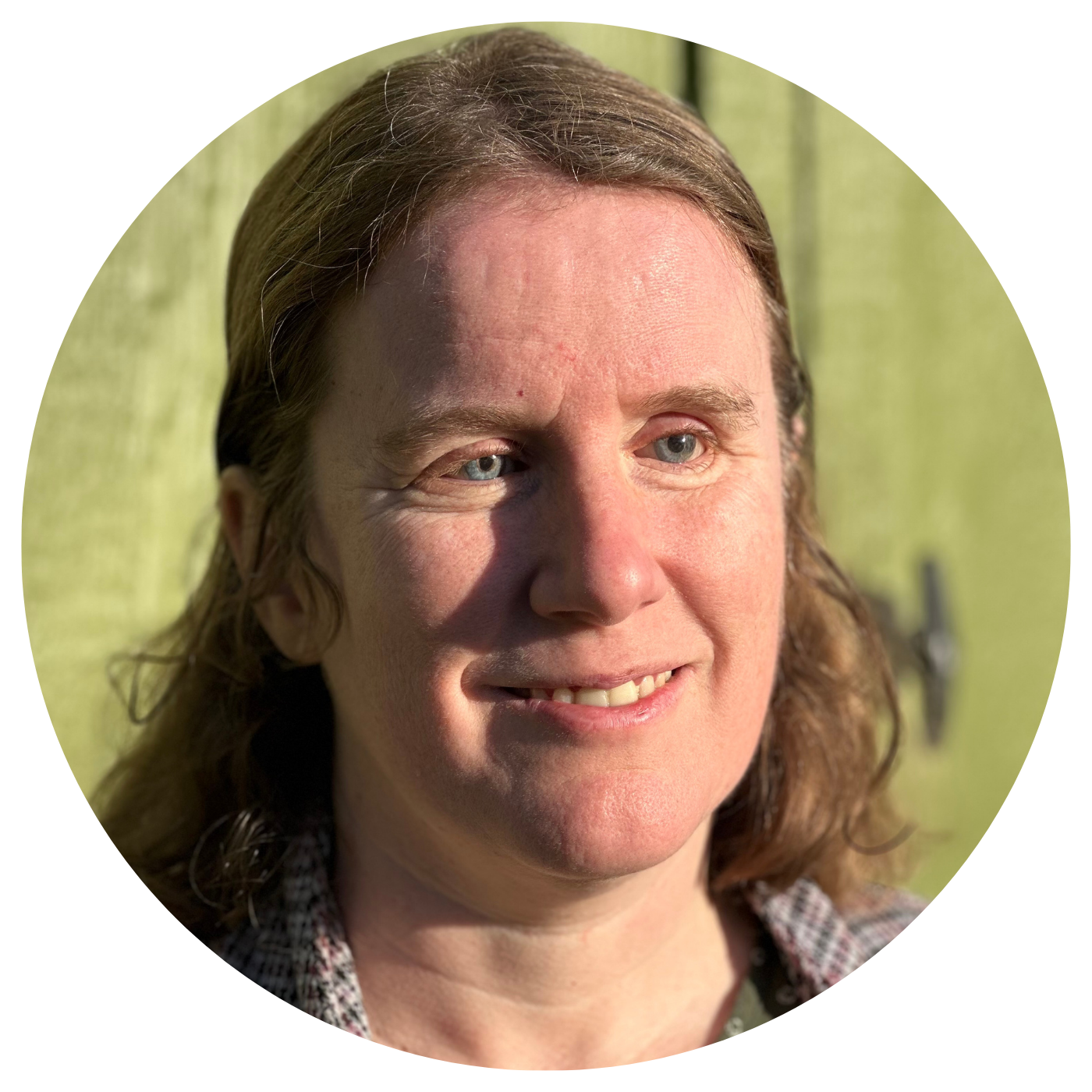
Deputy Director of Litigation, Public Citizen
Karla Gilbride is Deputy Director of Public Citizen’s Litigation Group and a former general counsel at the EEOC, where she led the agency's litigation and amicus program to combat discrimination in the workplace. She previously co-directed Public Justice’s Access to Justice Project and secured the U.S. Supreme Court’s unanimous decision in Morgan v. Sundance, advancing fairness in contract enforcement for workers and consumers. Drawing on her lived experience as a blind person, she continues to be a champion of civil rights and accessibility.