Sticky Lawyers Looks Back: The Multidimensionalists
Many great attorneys are hyper-focused on the law they practice. But other remarkable lawyers enhance their practice skills with disciplines outside the law. We call them multidimensionalists.
Ultra-endurance racing. Stand-up comedy. Ballet and music. Emergency medical response. Even clown performance. More than hobbies or creative outlets, these parallel pursuits can be every bit as demanding—and rewarding—as a legal career.
This special episode looks back at Sticky Lawyers who refuse to let the profession consume them entirely. No armchair quarterbacks or weekend warriors here; just eleven attorneys who prove that expansion—not reduction—is the path to both professional excellence and personal fulfillment.


Guest Insights
- [00:01:40] Adam Grant: Endurance athlete and Ironman/Ultraman competitor who brings calm to clients’ data breach crises.
- [00:05:26] Cielo Puccio: Ballet dancer who combines her dance knowledge with immigration and IP law to serve performing artists.
- [00:09:31] Chris Jennison: Active volunteer firefighter and EMT whose public service extends to counseling the FAA on employment matters.
- [00:13:47] Alysen Bayles: Children's book author who turned the anxiety of waiting for jury verdicts into a creative writing practice.
- [00:17:43] Chuck Tatelbaum: Macy's Thanksgiving Day Parade clown who applies the same meticulous preparation to bankruptcy litigation.
- [00:22:20] Gary Greene: Founder and conductor of the LA Lawyers Philharmonic, who gives attorneys and judges the opportunity to express themselves musically.
- [00:26:08] James Daily: Creator of The Law and the Multiverse blog and book, who uses superhero scenarios to make legal concepts accessible.
- [00:30:17] Jenny Wu: A CBS Amazing Race competitor who discovered reality TV resilience mirrors high-pressure legal negotiations.
- [00:33:46] Michael Currie: Stand-up comedian and litigator who uses comedy club experience to sharpen his courtroom skills.
- [00:38:06] Morris Lilienthal: Social media creator who connects with his community through authenticity and vulnerability, not legal content.
- [00:42:27] Tracy Inscore: Environmental lawyer and EFT tapping practitioner who coaches attorneys through burnout.
01:40 - Adam Grant: Endurance athlete and Ironman/Ultraman competitor who brings calm to clients’ data breach crises.
05:26 - Cielo Puccio: Ballet dancer who combines her dance knowledge with immigration and IP law to serve performing artists.
09:31 - Chris Jennison: Active volunteer firefighter and EMT whose public service extends to counseling the FAA on employment matters.
13:47 - Alysen Bayles: Children's book author who turned the anxiety of waiting for jury verdicts into a creative writing practice.
17:43 - Chuck Tatelbaum: Macy's Thanksgiving Day Parade clown who applies the same meticulous preparation to bankruptcy litigation.
22:20 - Gary Greene: Founder and conductor of the LA Lawyers Philharmonic, who gives attorneys and judges the opportunity to express themselves musically.
26:08 - James Daily: Creator of The Law and the Multiverse blog and book, who uses superhero scenarios to make legal concepts accessible.
30:17 - Jenny Wu: A CBS Amazing Race competitor who discovered reality TV resilience mirrors high-pressure legal negotiations.
33:46 - Michael Currie: Stand-up comedian and litigator who uses comedy club experience to sharpen his courtroom skills.
38:06 - Morris Lilienthal: Social media creator who connects with his community through authenticity and vulnerability, not legal content.
42:27 - Tracy Inscore: Environmental lawyer and EFT tapping practitioner who coaches attorneys through burnout.
[00:00:09] John Reed: Hey, everybody. This is another episode in our special series examining unique Sticky Lawyer attributes and patterns. We hope you enjoy looking back at these guests as much as we did.
The legal profession has a tendency to consume lawyers, sometimes completely. The billable hour, client demands, trials, deals, etc.—they can contract one's identity until the lawyer exists in a single dimension.
There are some attorneys who refuse to be reduced this way. They deliberately pursue additional capabilities, outlets, and challenges that expand their identities.
This episode features multidimensionalists: lawyers who have constructed separate dimensions as triathletes, ballet dancers, firefighters, standup comedians, and parade clowns. These aren't casual hobbies. They are commitments that, like the law, demand discipline, training time, and mental energy.
You may wonder whether operating in multiple dimensions makes these lawyers more effective or simply more stretched. Listen to their stories. I think you'll find that the expansion strengthens rather than dilutes their law practices.
Adam Grant's extreme endurance training created mental resilience that transformed his legal practice. The crisis management skills he developed during ultra-distance races now guide how he counsels clients through data breaches.
[00:01:40] Adam Grant: I think the first time I experienced it, I was on a treadmill, and I had a couple of hours of a run, and within about 15 minutes, I had dropped into this particular state. The next thing I knew, I had about 15 minutes left on my workout, and I really don't know where the time went. I was just completely in my head and being in tune with my body. Dealing with any discomfort in long workouts happens. Once you drop into this flow state, it just kind of washes away.
When I get into flow in the work, I can't describe how it happens, but when I sit down, and I look at a matter, and I start spotting issues, and I start seeing different avenues that people haven't seen before, it simply just flows. It clicks within me.
[00:02:32] John Reed: But it was on one of your training swims that you conceptualized, for the first time, this practice has kind of become your signature.
[00:02:43] Adam Grant: So, the epiphany of the digital privacy practice occurred during an extremely long swim. During long sets, as I said, with the swimming is frequently where I go into both the physical and mental state. The iPhone came out in 2007, and in 2008 or so, during a long swim. I started thinking, 'Wow, iPhone mobile apps.’ And then I went back to personal jurisdiction, privacy issues. What is going on in this phone? Is the phone really a phone, or is it an advertising vehicle? And from that, I thought, this is going to be an interesting area of law.
[00:03:23] John Reed: Probably more than any other lawyer we've had on Sticky Lawyers, crisis communications, crisis response is part of your practice. Everything's running at a fever pitch. There's fear. There's all sorts of worst-case scenarios going on in your clients' minds. Talk about counseling the client through that type of crisis.
[00:03:44] Adam Grant: There's a significant amount of crossover between endurance racing and that skill that you just identified. When you have the short race of an Ironman versus a slightly longer race of an Ultraman, at some point during the day or one of the days, there is going to be some kind of a crisis.
An excellent example, the second time I did the Ultraman World Championships and came in third, I was descending on the south part of the island, going about 40 miles an hour, when my handlebars, they're called Arrow Bars on time trial bikes. The ones where you're leaning over and your elbows are actually on the pads, and you're in quite a position, it became loose, such that I wasn't sure whether it was going to stay on the actual bike. I could feel it. So, I had to have the presence of mind to slowly get my hands out of the arrow position and slowly feather the brakes, so I didn't lose control, and I had to, at the same time, press my knees into the top bar of the bike to keep it stable.
Those types of mental shifts of everything's going fine. Something is really not going fine, and then getting your head back into it. In a calm, cool, and collected way is very much how I manage to deal with my client. I literally talk with them about, let's not focus on three days from now, two hours from now. Let's focus on the next five minutes.
[00:05:26] John Reed: Years of ballet training gave Cielo Puccio unique insight into the artist's world. When an unexpected opportunity emerged, she fused her dance expertise with her legal practice to serve a community she understood intimately.
[00:05:44] Cielo Puccio: And my teacher knew that I was an attorney and she had an extraordinary ability dancer with her that was having issues with her visa. And she told in front of the class. You know what, why don't you go to Cielo? She is an attorney, and she's one of us. And that was my light bulb moment. That is what I should do. I should create a practice in which I could combine my knowledge of dancing and my knowledge of law, and as an extra benefit, help and aid this dancing community, which I love, and I've been part of for so long.
[00:06:28] John Reed: How do trademarks and copyrights come into play with your dance clientele?
[00:06:34] Cielo Puccio: Well, copyright, it's easier than trademark, because it's not only copywriting a song, but it's a dancing piece or a whole ballet performance. And as dancers, we get hired many times to work for a school or to work for a dance company. And when you read those contracts, among the work that you're going to do is choreograph pieces.
So, yes, there's always the clause of work for hire, but if there's not that clause or if that clause could be studied and there are things that could be fixed, there's always the argument or the issue that choreography was done by me. And I own it so I could register or I can protect it, or maybe I could send it to you, but just during a period of time.
So, the copyright issue, I've been addressed by many dancers that are also choreographers. And this is the argument that we get into. What do you sign or how do you want to sign it before they haven't signed it? Or what do you want back?
[00:07:36] John Reed: Sure. I often ask this question, and I'll ask it of you. What are your greatest hits? You know, you've had success in your practice. Success means different things to different people.
[00:07:48] Cielo Puccio: Well, I really have a client that is very dear to my heart because he became a friend after, and we did an O1B visa, the visa specifically for artists. And he came from Mexico, and we wanted to bring him here to the United States. And he was going to become in the United States, the job opportunity that he had, it was going to be a very big jump to what he was doing. Not only because it was going to be a huge title, but because he was going to be leading one of the most prestigious dance companies here in the United States and the visa took time.
Because we were going to have to go through many documents. It was, we have to search through all his life. We needed to really search and really provide this life book to the officer so that when he evaluated everything, he ruled in favor of us. So, the producing time only and the preparation was six to eight months. Even though it was long, again, because of my boutique approach, it was a very satisfying process through me. I got to know him. So, we become friends and it's something that it's always very nice to have when that client becomes already a friend.
And then when we submitted, in less than two weeks, we got an approval. So that was also very satisfying that in a very short time, we got that approval, even though the work took so long. And it has been a client that has been with me along the way, since we are already friends, I now take classes with him. Sometimes I go see him. You see? Yeah. So, the relationship evolves.
[00:09:31] John Reed: Chris Jennison's commitment to emergency medical service runs parallel to his legal career. It's demanding just like his law practice, but he makes it work.
[00:09:44] Chris Jennison: I had wanted to do fire EMS since I was a kid. My county had a, high school EMT program where you went for half a day over to the fire academy, got to get your EMT and fire credential. And I was not able to do that. And I think that kind of stuck with me that I couldn't do that. I thought it was kind of cool. You could get out of school and go play with fire and EMS stuff for half a day. It sounded pretty, pretty dang cool to me, and I couldn't make that work.
I went up to Syracuse for undergrad and the first week of school, a guy who I'd become friends with had been a firefighter back home in high school. And he said, Hey, I'm going to this open house for this thing called SUA. Syracuse University Ambulance. You want to come? And I didn't have anything going on, so I said, yeah, I'll go. That sounds kind of cool. Went to the open house, applied, got accepted, and we were both hooked.
[00:10:35] John Reed: Rather than chalk it up as a great experience and leave it behind, you did, and you still do stay active in your EMT work. How did that work as a new lawyer?
[00:10:47] Chris Jennison: It was tough. It was tough. I think the average volunteer time that I've heard before for a volunteer EMT in the United States is four years. Regardless of where you're volunteering, regardless of what setting you're in, it's a demand. It's a demand on you. It's a demand on your day. It's a demand on your family. And, that demand was there as I was a new attorney, which is also itself a huge demand.
A friend of mine from the honors program who's now out now over at the Virginia Department of Emergency Management. His name is Dylan Taylor. And Dylan was a career firefighter and kind of had the whole mindset that I've had. And I was an honors attorney rotating around and enjoying what I was doing, but also feeling that like there was some other itch out there too, and not knowing what that was. And Dylan said, Well, why don't you think about volunteering somewhere as an EMT? I don't know what that looks like in the DC area, but why don't you think about that?
So, I looked around and found that the department that's closest to where I live wanted us there by, I think, 5:30 PM. And there was no way I could get from downtown DC to the department by 5:30 PM when I was leaving at 5:00 PM.
So, I asked around a little bit more, looked around a little bit more, and found BCC Rescue, which the shift started at 7:00 PM, and I could make that work. I was on the Thursday night crew. And so, for five out of every six weeks, I would ride on Thursday night, be on from 7:00 PM to 7:00 AM at one of the two stations we were staffing at the time, and from 7:00 to 11:00 PM of that shift, it was not our time; it was station time. So training, dinner with a crew, cooking with a crew, eating with a crew, call time, station cleanup, chores around the station, whatnot.
After 11:00, it was our own time, other than if we were on calls, so we could. Do what we did as a college EMT: sleep, watch a movie, workout, do work. And folks kind of dispersed at that time to do their own thing. But that meant that come Friday, I was going downtown at the time. It was pre-pandemic, and so the flexibilities were much less so.
I had to report into the office and so there were days when I was pretty tired. I'd save up my Starbucks rewards to get a coffee with extra shots on those Fridays that were particularly tiresome.
What we talk about now at BC Rescue a lot, when we're talking to new volunteers, people are surprised that we are volunteers. They say, that's a thing still in, in this day and age? And everybody says, 'Yeah, I am a lawyer, a banker, a researcher, or a program manager in my day job, and then I do this too as a volunteer.’ Talk to anybody who's a volunteer firefighter or EMT, they'll say the same thing, that yes, it is a demand and it's something you have to balance and something that you have to keep sanity in. But it also gives you incredible personal return, too, because you're able to help so many people. But I'm also making some incredible connections, friends, and family there, too, along the way.
[00:13:47] John Reed: Alysen Bayles turned to creative writing as an outlet from the anxiety of waiting for jury verdicts. What began a stress relief became a parallel practice that enriched her mediation work in unexpected ways.
[00:14:02] Alysen Bayles: ADR is a really complex subject because there's so many different forms of ADR, but probably the one that people are most familiar with, at least namewise, is mediation. And the advantage to mediation is that it allows an opportunity to bring people together. And when I first started doing it, which is probably going to sound foreign to a lot of people, we would bring everybody together for the entire day. We would talk about the dispute. If we worked through lunch, we would have lunch together. But it allows a party to truly have a voice, to truly have a voice to tell their story. To be heard. And that is probably the most significant component of mediation, is allowing that party an opportunity to be heard without fear of some type of adverse ruling by the court. Some type of adverse instruction by the attorney. And having a voice. And especially in employment cases, in even complex commercial cases, people often don't feel as though they've had a voice.
[00:15:21] John Reed: Tell us how your children's literature author career began. What was the spark?
[00:15:27] Alysen Bayles: The initial spark was my mother growing up on a farm, and she was a writer, and she read to me, and I was very fortunate to have more books than I could ever read.
[00:15:38] John Reed: What did your mother write?
[00:15:39] Alysen Bayles: Oh, she loved to write poems. And she also loved to write short stories about different animals on the farm, but mostly poems. And then, she liked to write a lot about horses.
But then, when I started litigating cases, one of the things I despised, and for some litigators, they'll probably laugh at this, but I despised waiting for verdicts. It was just uncomfortable. It didn't matter how well I thought the case went. I just hated that. So, after doing a debrief with clients, I just had to find another outlet because I was literally going crazy waiting for verdicts.
And so, I just started writing down different things about, you know, if I could make Mr. Jones into an animal, what animal would I make Mr. Jones on the witness stand into? So, Mr. Jones became a dog, or Mr. Jones became a cat or a turtle. And then I just started putting together more and more stories as time went on because I had more than 80 jury verdicts that I had to wait for.
[00:16:54] John Reed: Winston, about a dog, was your first book published in 2020, followed by Silly Sam From Galapagos Land (Sam's a cat) in 2022, and Cambridge and Clyde (Clyde's a dog) in 2023. How long were these stories in your head before you put pen to paper, or were they, while you were waiting for the verdict, ideas that blossomed later?
[00:17:18] Alysen Bayles: Well, Winston was definitely one of the very first ones while waiting for verdicts, and I had kind of had the story coming together before my mom passed away, now 12 years ago. But she was really the impetus.
[00:17:43] John Reed: Chuck Tatelbaum's preparation for the Macy's Thanksgiving Day parade mirrors his approach to complex bankruptcy, litigation, discipline, physical training, meticulous planning, and professional execution under pressure.
[00:17:58] Chuck Tatelbaum: I started as a regimen as a result of my being in the parade. I walk and jog every morning between 5:30 and 6:30. And being in Florida, it's easy to do 12 months a year except when it's raining. But beginning Labor Day, which is my start date, that's when I'm walking, and I spend the time walking through the neighborhood, waving my arm, in order to build up the arm muscles.
Because when you're waving for multiple miles, most of us don't have those muscle things. And then towards the end, I will sometimes wear a nose in order to practice breathing through my mouth in the event that the costume requires wearing a nose.
[00:18:41] John Reed: I hope your neighbors know what you're doing and you're not just that crazy guy that's waving and wearing a clown nose.
[00:18:47] Chuck Tatelbaum: Most do, but we have the Fort Lauderdale police do a private patrol through our neighborhood. And all the patrol officers do know who I am, so that when they see me walking, waving, and looking crazy, they just wave and smile.
[00:19:05] John Reed: The police only know you because of your clown role, I trust.
[00:19:08] Chuck Tatelbaum: I hope so, yes.
[00:19:10] John Reed: Okay. Very good. That's your local Florida training. Do you just show up on Thanksgiving morning for the parade?
[00:19:17] Chuck Tatelbaum: No. You go up a couple weeks before to get renewed training and learn what your costume is, meet with your clown captain, and depending on which costume you're in, your clown captain may go over up to three dance routines that the group would do in the event that the parade stops for a commercial or something. Meet the people who are with you, and just get used to what your clown captain expects of you in the group because different costumes require different actions during the parade.
Our regimen is to go up on Sunday before Thanksgiving, so I can walk in New York, where it's cold. Also, little things. New York streets are different in that the center of the street is built up higher than the curb area for drainage. And since we walk along the side, you actually tilt a little bit. So, I walk in the gutters in New York, because I like to walk on the left side to build up my muscles, because one's going to be more than the other.
[00:20:23] John Reed: I never imagined there would be so much thought that would go into the training. This is fascinating. Now, I've done my research. There are Alphabet Clowns, Artist Clowns, Birthday Party Clowns, Keystone Cops and Robbers, Nutty Cracker Ballet Clowns, and Spacey Clowns. Which have you been and what has been your favorite?
[00:20:42] Chuck Tatelbaum: Well, there've been others than that. I've been a celebration clown. I've been a Raggedy Andy clown. I have been a football player clown, and I have been a Keystone Cop clown. Oh, and the first one was a breakfast clown where I was a five-foot piece of toast behind the Pillsbury Doughboy balloon, and my wife was a stick of butter.
[00:21:05] John Reed: What has your favorite clown or clown costume been.
[00:21:08] Chuck Tatelbaum: I think it's been the birthday cake. Because the dance, when we were called to the center, there were six slices of cake and 12 ice cream cones. And so, the six of us who were slices of cake came together into one round cake and then did a dance as a cake.
[00:21:26] John Reed: I'm so loving this. And then do you interact with the crowd, too?
[00:21:30] Chuck Tatelbaum: Yes, on that one, what we did is we would go over to one side of the street or the other where there were the most kids, and yell out, "Who's having a birthday?" And if there was someone, we would sing to them. And if not, we'd say, well, it's your birthday, to some seven, 6-year-old, get their name. And we would sing to them and throw confetti at them.
[00:21:51] John Reed: Gary Greene founded and conducts the LA Lawyers. Phil Harmonic is an orchestra of attorneys who trained at institutions like Juilliard before choosing law school over concert halls. His discovery? Managing complex artistic collaborations requires precisely the same skills as managing complex legal teams and vice versa, requires precisely the same skills as managing complex cases and vice versa.
[00:22:20] Gary Greene: One day, I was introduced to a judge who happened to be a trumpet player. And we got to talking, and he told me he even brought his trumpet to chambers, and he was very much involved in music. And during the conversation, he was telling me, well, this other judge plays violin. This other judge plays viola, and this one and that. I said, That's kind of interesting. I wonder if we could bring all these lawyers, judges, musicians together and form a group.
So, we put the word out in the legal papers, to the bar associations, and I was absolutely surprised. Within a week, I had more than a hundred responses. I looked at their credentials and then was even further shocked. These were people who went to Juilliard, New England Conservatory, Cleveland Institute, San Francisco Conservatory, Thornton School of Music, and so many other music schools. These were really musicians.
So, I held my first rehearsal with about 30 musicians, 30 lawyers and judges, and I was again shocked how well they played. So, I started asking them, "Well, you play professionally like a professional. What attracted you to law?" And they all had the same answer. "We wanted to be professional musicians. We couldn't make a living. We went to law school."
Right away, at the beginning we had trumpets, trombones, French horns. Tuba even. And the percussion instruments. Violins, violas, celli instruments. I had a little of everybody, and once we started playing, we got the word out, more people came to us. From criminal defense to prosecution, to civil lawyers, and various areas of law. From large law firms to sole practitioners. It ran the gamut, which was really nice. And judges.
We also did a special performance in the Library of Congress in Washington, DC, in their great hall. And when I was there, I was told that the only other band performing there was the Marine Band. So, it was a really great thrill for us.
We did a soundtrack for a radio rebroadcast of a program called We Hold These Truths. Our performance was on the 75th anniversary of the original performance, which was to commemorate the Bill of Rights and the Constitution. The original performance of all things took place in December of 1941, right after Pearl Harbor, and it was broadcast on all the networks nationwide with a list of major celebrities, and it included the New York Philharmonic and Leopold Stokowski conducting.
I was asked to do the remake with our orchestra. It was pretty neat, and from that broadcast, we were invited to participate in an international radio competition. We also won that competition and won a gold medal for that in 2017. There was only one other orchestra that won an award at that particular award ceremony besides the Los Angeles Lawyers Philharmonic. It was the New York Philharmonic.
Because we have a profession in law, music is not our bread and butter. It's not like it's just a job and we get paid. We all volunteer. Because we have this passion, we probably play with more passion than any other orchestra. That's why we do it. We've been very successful in a lot of our performances, almost all to capacity houses, wherever we went.
[00:26:08] John Reed: A legal technology scholar, James Daily has also analyzed superhero law on his popular law and subsequent book. His unusual combination reveals how making complex legal concepts accessible, whether to law students or comic book fans, requires the same skill: finding the precise analogy that makes abstract principles tangible.
You started The Law and the Multiverse Blog with Ryan Davidson and the Law of Superheroes book with him as well. You and your insights have been featured in the New York Times, Wired, NPR, the ABA Journal, and you've made the rounds at comic book conventions as well. So, you've got street cred, that's for sure. For the uninitiated, how do you describe what the blog and the book are all about?
[00:26:57] James Daily: The idea is to explain legal concepts using comic books and their, you know, associated movies and so forth as the jumping off point and also popular media beyond that.
When we think about legal concepts, they often seem a little, a little abstract at times. And when we think about the cases that they're often explained through, uh, the usual method of looking at case law. This is even, it is still abstract. Uh, either it's, you know, just, uh, completely artificial, something like Black Acre, or you know, plaintiff-defendant. Or even if it's a real case involving real people over real property, for example. These are people that we don't know.
Whereas with comic books, I hesitate to say everybody knows, but many people I would say are familiar with Superman, with The Joker, with Lex Luther, with the X-Men, and so forth. And so, they know who these people are. They know their motivations; they know their concerns. And this provides a sort of a good jumping-off point. It's a way for people to; it grabs their attention. It makes them think.
One of the things that comic book fans and lawyers both really enjoy doing, it's overanalyzing a situation and taking it to its finest detail and really thinking deeply about it and putting those two things together ends up being pretty natural, working quite well.
Sure. And it is, it is a lot of fun to think about questions like, well, you know, if Superman crushes coal into a diamond, does he have to pay income tax on that? If he gives it to Lois Lane, does she have to pay income tax on that?
And the great thing about comics is because there's been something like 130,000 individual issues of comics published over the past hundred years or so, almost every single imaginable area of the law has been touched on.
One of the great things about comics is they are larger than life. They're big situations, they're extreme. And yet sometimes, just like with science fiction, they can be a little bit of a window into the future, about things that might happen someday.
So, for example, you talked about life sentences for an immortal being, well, immortality's maybe still very much the stuff of science fiction, but longer life is an increasing possibility and probably not hundreds of years, but perhaps notably longer than people live today. And the question is, what could that potentially change what we think about in terms of cruel and unusual punishment? You know, that if you're sentencing someone to life, and for most people that means probably a hundred years at the absolute most, right? If they commit a crime when they're say 20 and live to 120, as unlikely as that might be. But what if a hundred or 120 becomes a pretty normal age to live to? It's maybe very different than what the framers had in mind when they thought about cruel and unusual punishment. That if you sentence someone to prison in the 18th century, you are not sentencing them to a hundred years.
And then of course there's questions about robots and AI and their rights or responsibilities and where that falls legally. So, when we think about villains, like Ultron, for example, does he or it have some kind of inherent liability itself, as an AI? Or does it all fall onto its, uh, creators, that kind of thing.
And I think these can provide some opportunities to think about it. Not necessarily to say that we will discern the truth by looking at comic books. No, but that it at least provides an opportunity to start thinking about that.
[00:30:17] John Reed: Jenny Wu competed on CBS's Amazing Race, traveling 30,000 miles across 11 countries in 21 days. Her revelation? The resilience required for reality TV competition mirrors exactly what's needed to navigate high-pressure legal negotiations where conditions change constantly.
[00:30:45] Jenny Wu: One Friday afternoon I got, you know, an email from them saying, we don't think we have a place for you this season, but like basically keep trying. Good luck. And I read it and at first, and I was definitely sad, disappointed. Then I was like, they said, No, but I'm not going to take that No, just yet. It just so happened that weekend, the MTV Movie Awards and the Emmys were taking place, and I was invited to attend the Emmys and also their after-party, the Governor's Ball. So, I was like, oh, the Amazing Race. They're nominated for an Emmy. They're always nominated every single year for Best Reality Show. I was like, that means the entire team will be there. So maybe I can try to find, I don't know, maybe the creator. Maybe I can talk to him and convince him to let me back on the show.
So afterwards we go to the Governor's Ball, and it is amazing. All I'm focused on is how do I find the creator of the Amazing race? There, he's, he's like sitting down. I like run up to him. No, not run. I, I like, you know, casually walk up to him, but inside I was like shaking, just feeling all this adrenaline and excitement and I go up to him and I'm like, hi, Mr. Bertram. I didn't know his last name, so I called him Mr. Bertram. because I wanted to be polite. You don't know me, but my name is Jenny Wu and I had applied to be on The Amazing Race and I got pretty far, but you guys cut me on Friday and I just think that you've made a mistake and I should be on your show because, and I gave a bunch of like reasons I don't remember what, and he like takes one look at me.
And I was thinking, okay, he either, he's either going to think I'm like really crazy or maybe he'll be impressed. And he's okay. I'm like, ' Okay, yeah, okay. ‘ Yeah. Okay, that makes sense. Okay, we'll let you back on the show. And he's like, Lynn is the casting director. He's Lynn.
Come over here, like Lynn, this is Jenny. You cut her from the show on Friday. I think you should put her back on.
So, we went to Tokyo. Uh, from Tokyo, we went to Bangkok. And then we were in Munich for a bit. We were in Amsterdam. We made our way to Africa, to Namibia, we went to Peru.
The very end of our race, the final leg, was in Texas. Yeah. It was in Dallas, Texas, at the place where they play football, that stadium. It was such a life-changing experience and also like just a very like empowering moment for me because, I went on the race just wanting an adventure, not because I felt like I was
going to win it or that I was really, yeah. I, and so to have gone that far and to have made it to second place. Yeah. And to have traveled around the world and to have been able to do it on my own. It was me. Yeah. Trying to work together as a team. It was such an empowering moment for me.
[00:33:46] John Reed: Michael Currie's standup comedy sharpened the exact skills he uses in the courtroom: thinking on his feet, handling rejection, thorough preparation, and connecting with an audience of judges and juries. The parallels between comedy clubs and courtrooms are direct and measurable.
[00:34:06] Michael Currie: I was in Ottawa, and there was a group of us who were performing standup together there. It was an informal group where we kind of, over one summer, we ended up doing some shows together. They decided that at a Pizza Hut at noon on a Saturday was the time to have stand-up comedy. So, we're in this Pizza Hut - It's a buffet too - so like people are getting up to get their pizza and their salad. All the TVs are on, playing a sporting event, playing the news. People are there with their three-year-olds and four-year-olds running around.
There's not even a stage. We're just like off in the corner with a mic doing five minutes of material each. And the first person, the emcee, goes up, and he lasts like 30 seconds because nobody's engaging with him, understandably, because they're all there just to have lunch. And so, by the end of it, all of us were just performing. And we said the goal is if we can get one family to even acknowledge, not even a laugh, just if they can acknowledge that we're doing stand-up. That's all. That's all we're asking for.
[00:35:02] John Reed: That is a tough, tough crowd.
[00:35:05] Michael Currie: But those are also the experiences that at least I remember, and I know people who have done this much more than me, talk about the war stories. And they talk about, similar to lawyers, where they talk about the tough examinations they did or the tough clients they had. Those are some of the experiences that I look back fondly on as well, because they teach you something about yourself and how you can perform even in very, very challenging circumstances.
[00:35:32] John Reed: What are the similarities between litigation and stand-up, and how does one inform the other?
[00:35:39] Michael Currie: The fundamental one is you can't replace on your feet experience. So, you can think about a joke as much as you want. You can write it and craft it as much as you want, but until you do it in front of an audience, the audience is the barometer, and you'll find out very shortly, or very quickly, whether that joke works or not. And you may have to do it ten times. You may have to do it 20 times to make sure you're comfortable with it and you find out does that work or not. You can't do it in a vacuum.
And similar with being a courtroom lawyer or doing a deposition, you can watch somebody do it or you can watch videos on it and read about it. But until you actually do it, it's very, very different. And you can only learn your own style on how to approach both of them by doing it.
One of the other characteristics for both is you need to have a thick skin. The feedback on doing a standup routine is immediate, and it's very public. And so, you need to be comfortable in your own skin to know sometimes you're just not going to have the jokes land, it's not going to go well, but you’ve got to still give it a hundred percent. If you don't, the audience will know. And the same for lawyers. most of the time, the feedback is sometimes instantaneous from the judge, but it's a few months out if they reserve and you get a decision. But both outcomes are very public, and you’ve got to have thick skin when it doesn't go well. And even when it goes well, you have to stay grounded in knowing that the next time you still have to, to, uh, be prepared that it may not go well.
And then the last one is preparation. The amount of times I've gone to a show where I've seen somebody perform standup where I thought, man, they have a good joke there, but they just totally butchered the punchline, or they totally butchered the setup. You’ve got to write down and prepare your jokes as much as possible, but you’ve got to perform them, and the two of them are linked. And same with being a courtroom lawyer. You've got to know the documents. You've got to know the evidence. You've got to be prepared when your witness or another witness says something that is not accurate, to know where to find those documents to impeach them or to contradict them in the record. If you don't have that familiarity, it's just not going to go as well as if, when you spend the time to prepare.
[00:38:06] John Reed: Mo Lilienthal built a substantial social media following by sharing authentic moments from his life. Not his law career or his legal experience, what he learned transformed his approach to client development. Genuine human connection creates stronger professional relationships than any amount of technical, legal knowledge shared online.
One thing I want to start off with is how I started to do some research on you. First, I went to your law firm website bio, and it's very buttoned up. But there's a curious little badge that says Mo Show Live.
And you click on that link; it takes you from Morris to Mo. And I love the fact that the first line on that, that separate website says, "I'm Morris, and I'm a dad, husband, volunteer, and trial lawyer."
[00:39:00] Mo Lilienthal: It's just who I am and, and, and it's who I am in that order. And I think if you've got your priorities straight, and how I was raised and things that influenced me growing up. I've always put my family first. Because I think at my core and what I think should be everybody's core, if I was influencing others, should be family, your friends, and giving back to the community because they are essentially your larger family and friends, whether you know them or you don't.
My backstory on social media is like a lot of people, and that is, I was kind of just someone that was on a couple of platforms, mainly Facebook to start with, and I just kind of looked and lurked and occasionally if it prompted me I'd give a like. But it really started, maybe, where I was kind of looking at ways to get involved more in the community and spread positivity and highlight things and help others and engage.
It kind of started with me doing what I call my Tips From Mo, which were these 60-second video tips and had nothing to do with the law, because nobody wants to hear about the law.
[00:40:00] John Reed: You didn't contrive these 500 videos. You didn't sit down and say, What's really going to work with this group that I'm trying to market to? And if it flopped, it kind of sounds like you would've been okay with it. And if it took off, that's okay too. But you stayed true to it.
So, you went from being a looker, lurker, thumb scrolling, and liking whatever else, then you moved into video. Then what?
[00:40:24] Mo Lilienthal: That gave me the inspiration and the confidence, probably, to start the Mo Show Live, which was my Facebook Live show. And I started that with the idea of highlighting nonprofits, people who are doing good in our community, and other people who have a great story. And that's what I've done.
And I've been doing that show for three plus years now, and I've had 80 plus guests on. And then, as I've done that, what has developed is I've just refined that.
[00:40:53] John Reed: What really strikes me, though, is your vulnerability comes through on this stuff.
[00:40:58] Mo Lilienthal: In anything you're doing, and if you want to, we're talking about social specifically, I think it has to be genuine and true. And I think people see that and feel that and, and they know whether it's real or it's not. I've made connections with people that I've never met. People reach out to me or if I go to a conference, people will come up and tell me they follow me on social and they've made a connection with me through something that we share that I just shared it on social.
What I try to do is I, is I try to be real with people. The things that I share are life experiences that I have, that I think other people either have those experiences or would be interested in that experience, and maybe they haven't had the freedom or the willingness or the ability to open up and share that.
And there are things that I have questioned whether I should share that or would people be interested in that and do. And people that want to engage will engage and people that are reached are reached. And that's just kind of how I did. But you know, a lot of people ask me, Well, you just feel like you're really free with it, and you can do, and you don't have a problem with that.
And it, that's not true. I mean, especially at the outset of this three, four years ago, it was very, very difficult for me to let loose and start doing these videos. And I might shoot a Tip From Mo six or eight times before I felt like it was worthy of sending out. Now, oh my God, I, I never shoot it more than at most two, but almost, and that's once every blue moon. Now just shoot it one and done and get it over with.
[00:42:27] John Reed: Tracy Inscore practices environmental law while coaching attorneys through burnout using EFT tapping. Her revelation is structural: lawyers are trained to be cognitively overdeveloped. They are masters of analysis strategy, but somatically underdeveloped, disconnected from their body's signals. Her dual expertise addresses the gap that traditional legal training creates.
[00:42:56] Tracy Inscore: Yeah, so I graduated in 2008 in the middle of the Great Recession, and I was among the lucky few to have a good job offer right out of school, and it was practicing environmental land use real estate law, which wasn't something I was necessarily passionate about. It doesn't light my soul on fire, but I had student loans to pay back, and I had bills to pay.
I would say after about five years, I really hit a wall and the burnout, and all of those other symptoms really hit, and I made a decision to leave full-time practice and craft sort of a non-traditional legal career. I was a law professor and a college professor. I went in-house for an environmental consulting firm. I was even a fitness instructor. Just to round out. Like, I had about six different part-time gigs because I thought that getting away from full-time practice would be what solved the issue. I thought it was just, I'm not cut out to be a lawyer. Well, turns out, I burned out doing those other fun things, too.
When I say burnout, I'm talking about a chronic state of exhaustion and depletion on a physical, mental, emotional, even spiritual level. It's the kind of tired that sleep or a vacation won't fix. It's really being tired on a soul level.
So, I went through a spiritual awakening, for lack of a better term. I found myself on a healing path where I really opened my eyes to alternative and holistic healing because I had tried everything to feel better. I had tried everything to make this work.
In that process, I was seeing so many attorneys leave the legal profession entirely. And these were kind, creative, brilliant, empathic people, the kind of people that we need in positions of authority and leadership. But they were leaving because they were so burned out. Just adding to that, the number of fellow lawyers we're losing to substance abuse and suicide.
So, I became an EFT tapping practitioner. I discovered that as the modality that helped me the most, and it became my mission to just share it with as many people as possible.
[00:45:12] John Reed: EFT and tapping. Talk to us about what that is.
[00:45:16] Tracy Inscore: Yeah, so EFT stands for Emotional Freedom Techniques, commonly known as tapping, and it involves, as the name implies, tapping on certain meridian points in a specific sequence while we focus on an emotion or memory or a problem. So, it's based in traditional Chinese medicine, and it centers around this core premise that everything is energy, that all negative emotion is caused by energy blockages within the body. When there's any sort of blockage, that's when the physical ailments and illnesses and emotional issues start to happen.
[00:45:53] John Reed: So, let me be the naysayer here for a sec. Give us the clinical evidence. Give us the science behind this.
[00:45:59] Tracy Inscore: Oh yeah, I was the biggest skeptic, and in fact, I heard about EFT, and it took me a few years to try it, I'm embarrassed to say, because I thought this sounds too good to be true. The idea that lightly tapping on my own face was going to solve my problems just seemed ridiculous.
But it is actually clinically proven effective in treating anxiety and PTSD. What it actually does is it sends calming signals to the amygdala in the brain, which calms our nervous system and gets us out of that chronic "fight or flight" state that so many of us live in perpetually. And it actually helps us to create new neural pathways and increases our resilience long-term.
[00:46:47] John Reed: You've just heard from 11 lawyers who will not be defined solely by their legal work. They've built parallel lives as athletes, artists, performers, and healers, commitments that operate independently while strengthening their law practices.
Ultra-endurance racing performance translates directly to client counseling under pressure. Dance training and experience inform immigration advocacy for performing artists. Emergency medical training is another facet of public service. Meditation practice develops the psychological release essential for a sustained legal career.
The multidimensionalists you've heard today have proven that the legal profession doesn't have to consume its practitioners entirely—if you refuse to let it.
I'm John Reed, and you've been listening to Sticky Lawyers.

Personal Injury Attorney
Morris Lilienthal is a shareholder with the personal injury law firm of Martinson & Beason, P.C., in Huntsville, Alabama. Mo is as devoted to his clients and his community as he is to his family, and he frequently shares opinions and insights on social media as well as his streaming show and podcast, The Mo Show Live.


Researcher, Lecturer, and Data Scientist
James Daily is a multifaceted attorney with expertise as a researcher, lecturer, and data scientist. He earned both a master's degree in computer science and Juris Doctor (JD) degree from Washington University in St. Louis. Throughout his career, he has been a research associate at Stanford University's Hoover Institution, a litigation consultant with a focus on intellectual property matters, and a data scientist responsible for developing innovative legal and financial research software. James is also the co-author of "The Law of Superheroes" book and the "Law and the Multiverse" blog.

Ballet Dancing Lawyer
Cielomar Puccio is a bar licensed attorney in Puerto Rico and Washington, DC. She has a Juris Doctor from the University of Puerto Rico School of Law and a Bachelors of Arts in Advertising and Public Relations also from the University of Puerto Rico. She has more than 10 years of experience in law. Mrs. Puccio is also a ballet dancer. Her passion for the arts, especially ballet, motivated her to open her legal practice, Brandllet. She seeks to provide legal advice to her fellow artists with the advantage of having experience in the dance industry.

Data Privacy Attorney and Extreme Athlete
Adam D.H. Grant, a shareholder at Grant Shenon, brings over 30 years of legal prowess to complex business disputes, cybersecurity, mobile app law, privacy issues, and more. A family man and 13-time Ironman finisher, Grant balances his legal acumen with a passion for extreme athletics and his family.

Employment Lawyer and EMT
Chris Jennison is an accomplished employment lawyer and Headquarters Team Manager for Employment and Labor Law at the Federal Aviation Administration. Recognized for leadership in the legal community, he has chaired the ABA's Standing Committee on Paralegals, served as Speaker of the ABA's Young Lawyers Division, and is currently a member of the ABA's Board of Governors. Committed to community service, Chris, a continuous Emergency Medical Technician since 2009, volunteers at and is President of the Bethesda Chevy-Chase Rescue Squad.

Author, and Court ADR Director, Mediator, and Facilitator
Growing up on a farm in Wisconsin, Alysen Bayles (her pen name) discovered a love of writing at an early age. But it was only after two decades as a successful defense litigator and alternative dispute resolution pioneer that she would realize that passion. She now splits her focus between overseeing mediation and assessment for a federal district court in Missouri and authoring a growing list of children's books, including "Winston" (a heartfelt tribute to a beloved family dog), "Silly Sam from Galapagos Island," and "Cambridge and Clyde," which features a counter-surfing dog and his person, a girl whose mother is a judge.

Commercial Litigator and Stand-Up Comedian
Michael Currie is a partner with Lax O'Sullivan Lisus Gottlieb LLP in Toronto, Canada, where he represents public and privately-held companies in contractual disputes, franchise agreement disputes, oppression claims, injunctions, and class actions. Outside the courtroom, Michael performs stand-up comedy and is the founder of Good Laughs, an annual fundraising show featuring lawyers trying out stand-up comedy for a good cause. Good Laughs has raised over $50,000 for local and national charities since its inception.

Lawyer and Energy Healer
For 17 years, Tracy Inscore has counseled clients on environmental matters, during which she encountered, overcame, and studied lawyer burnout. Now, in addition to her law practice, she helps attorneys and other professionals address the deeper patterns that comprise the "burnout archetype" as a certified Emotional Freedom Techniques (EFT) tapping practitioner.
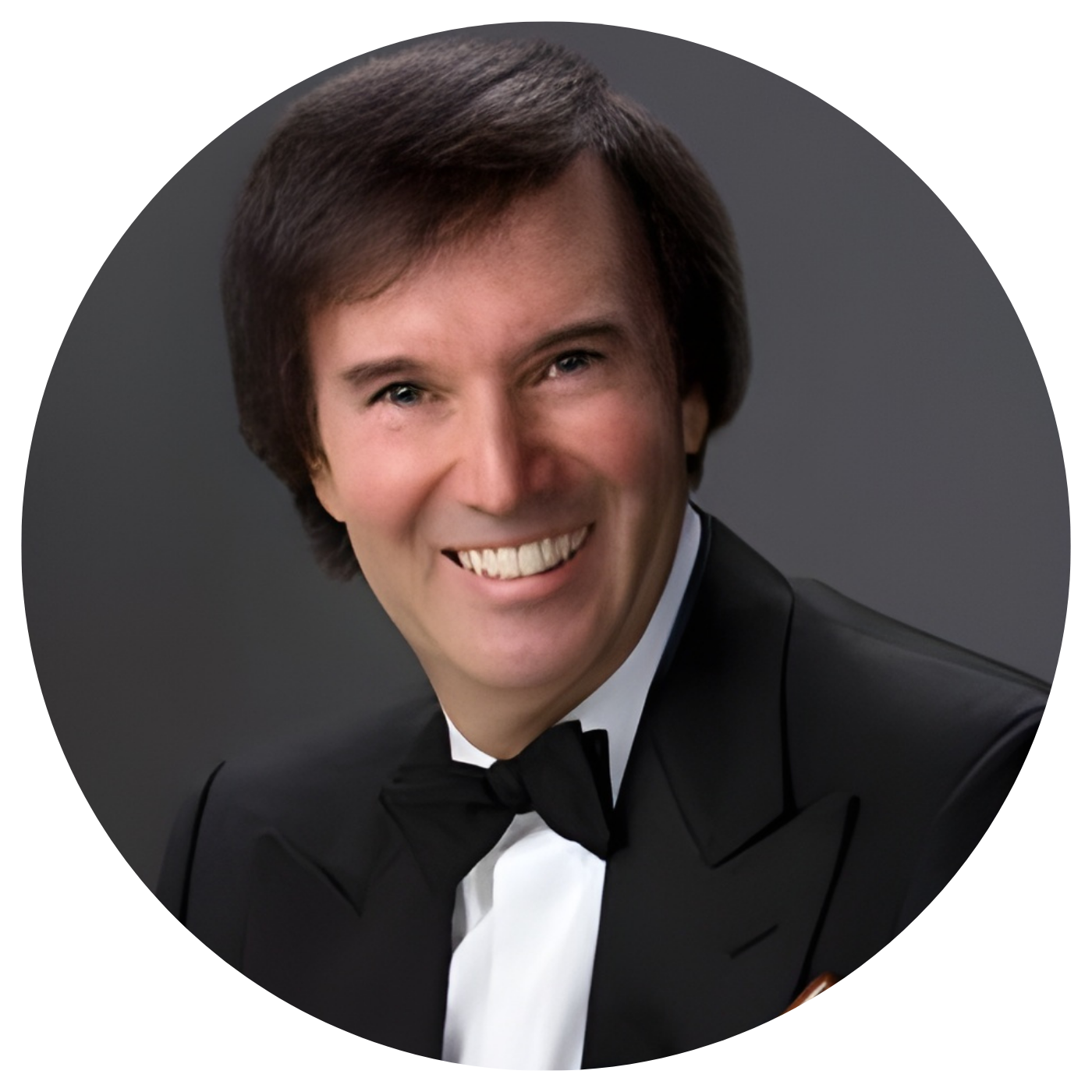
Attorney and Founder/Conductor, L.A. Lawyers Philharmonic
Gary S. Greene is a respected attorney and an accomplished violinist and conductor. He serves as the music director and founder of the Los Angeles Lawyers Philharmonic, Legal Voices, and Gary Greene, Esq. & His Big Band of Barristers, each made up of attorneys and judges with a passion for music. His ensembles perform at venues like Walt Disney Concert Hall, and every performance raises funds for charities. A longtime advocate for community through music, Gary has also conducted the Jr. Philharmonic Orchestra and continues to champion the power of music within the legal profession.
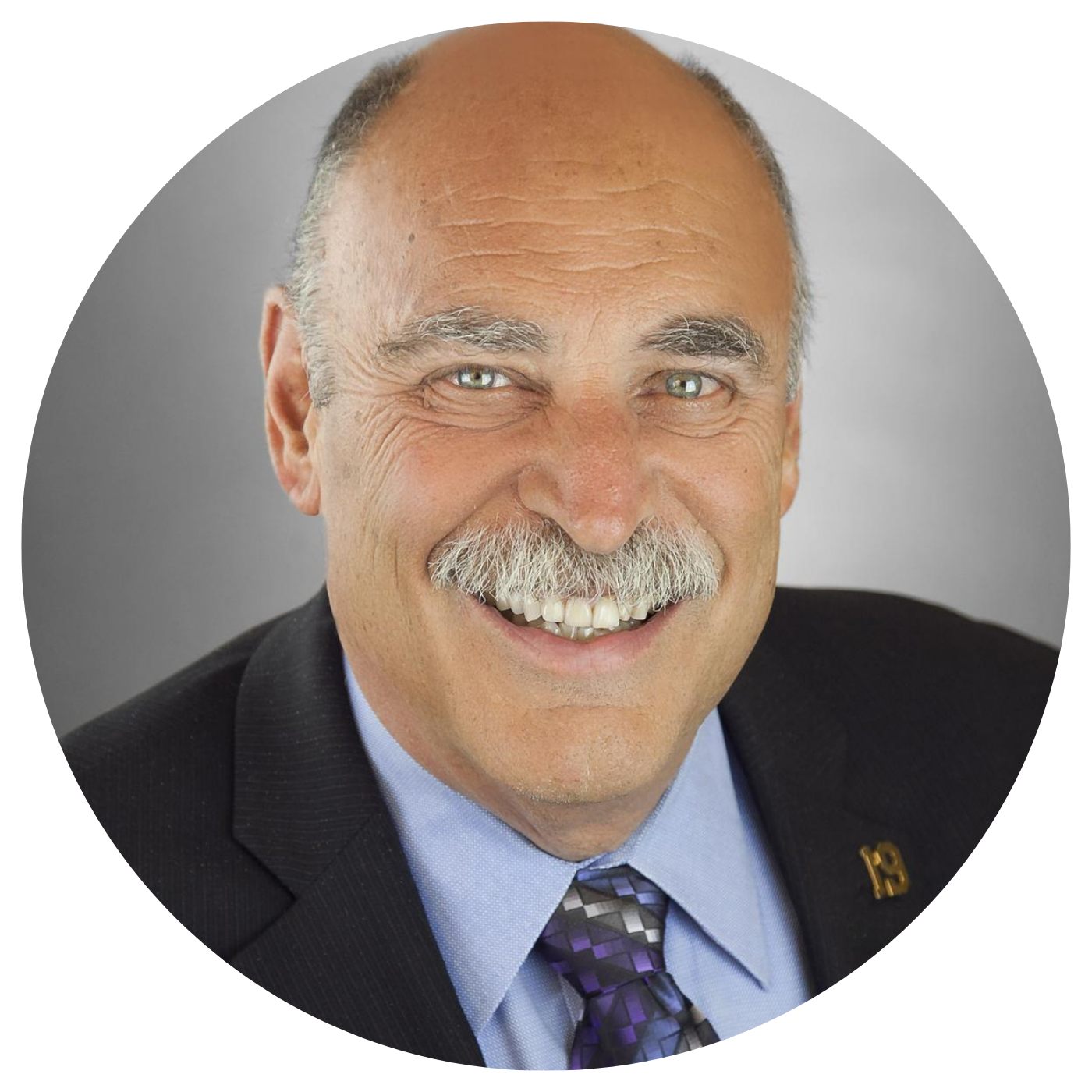
Director and Chair of the Creditors’ Rights and Bankruptcy Practice Group, Tripp Scott
For 59 years, Charles Tatelbaum has been one of the country’s foremost bankruptcy, creditors’ rights, and complex business litigation lawyers. He currently chairs the creditors’ rights and bankruptcy practice group at Tripp Scott and is recognized for representing Fortune 150 companies, as well as playing a critical role in several landmark bankruptcy cases. Chuck's extensive non-profit work includes leadership and board roles with South Florida PBS, Hispanic Unity of Florida, The Shepard Broad School of Law at Nova Southeastern University, and other civic organizations, reflecting his commitment to community service and the arts.