Sticky Lawyers Looks Back: The Niche Pioneers
What makes a lawyer irreplaceable?
It's not credentials or years of experience. It's not how much money you make or the size of your firm. What makes you irreplaceable is being the answer to a specific question. When someone has a particular legal problem, there's only one name they think of.
Yours.
In this special compilation episode, John Reed celebrates the niche pioneers—Sticky Lawyers who saw unserved markets or entirely new legal questions and said, "I'm gonna own this." We’ll hear from lawyers who blazed trails for themselves and others in bicycle law, exploration law, paranormal law, and international war crimes. We’ll get insights from attorneys who counsel space companies, craft brewers, video game developers, outdoor recreation businesses, Amazon resellers, and graphic novelists.
These lawyers established a vision for their practice and then went to extraordinary lengths to make it happen.


Guest Insights
- [00:02:14] Bob Mionske: Creating the bicycle attorney category and protecting cyclists' rights.
- [00:09:14] David Concannon: Organizing Titanic expeditions and navigating intellectual property in exploration law.
- [00:13:22] Haydee Dijkstal: Prosecuting war crimes and crimes against humanity at international tribunals.
- [00:18:14] John Schwartz: Practicing farm law while actually farming the land.
- [00:22:34] Lance Johnson: Building a practice around Amazon marketplace sellers and e-commerce law.
- [00:26:37] Laura Montgomery: Establishing herself in commercial space law before it became mainstream.
- [00:31:06] Michael Hall: Handling legal issues for paranormal investigators and haunted real estate.
- [00:34:11] Forrest Merithew: Living the outdoor recreation lifestyle while serving the industry.
- [00:37:57] John Szymankiewicz: Branding himself as "the beer attorney" for craft brewers and distillers.
- [00:41:13] Zachary Strebeck: Protecting video game developers with insider industry knowledge.
- [00:44:28] Caitlin DiMotta: Representing graphic novelists and visual storytellers.
02:14 - Bob Mionske: Creating the bicycle attorney category and protecting cyclists' rights.
09:14 - David Concannon: Organizing Titanic expeditions and navigating intellectual property in exploration law.
13:22 - Haydee Dijkstal: Prosecuting war crimes and crimes against humanity at international tribunals.
18:14 - John Schwartz: Practicing farm law while actually farming the land.
22:34 - Lance Johnson: Building a practice around Amazon marketplace sellers and e-commerce law.
26:37 - Laura Montgomery: Establishing herself in commercial space law before it became mainstream.
31:06 - Michael Hall: Handling legal issues for paranormal investigators and haunted real estate.
34:11 - Forrest Merithew: Living the outdoor recreation lifestyle while serving the industry.
37:57 - John Szymankiewicz: Branding himself as "the beer attorney" for craft brewers and distillers.
41:13 - Zachary Strebeck: Protecting video game developers with insider industry knowledge.
44:28 - Caitlin DiMotta: Representing graphic novelists and visual storytellers.
[00:00:09] John Reed: Hey, everybody. We're doing something a little different today, and for the next four episodes, actually.
We've looked at all our guests to date and spotted some unique patterns, traits, and events that elevated them to their stickiness. I hope you enjoy today's compilation.
What makes a lawyer irreplaceable? Not credentials, not years of experience, not how much money you make or the size of your firm. What makes you irreplaceable is being the answer to a specific question. When someone has a particular legal problem, there's only one name they think of or can go to. Yours.
This episode celebrates the niche pioneers, Sticky Lawyers who saw unserved markets or entirely new legal questions and said, "I'm gonna own this."
For example, Bob Mionski literally invented "bicycle attorney" as a category. David Concannon represents explorers who dive to the Titanic. Haydee Dijkstal's practice involves war crimes and international human rights abuses. John Schwartz is a farmer who also handles agricultural law matters.
We will also hear from lawyers counseling companies with interests in space, paranormal investigators, craft brewers, video game developers, outdoor recreation businesses, Amazon resellers, and graphic novelists.
These lawyers aren't generalists. They're specialists who went so narrow, so deep, that they defined a category. Before them, there was no there there. Or they saw a previously open door and threw it wide open. Or they established a vision for their practice and career, then went to extraordinary lengths to make it happen.
Let's meet the pioneers.
Bob Mionski coined the phrase bicycle attorney. When he hung his shingle in the 1990s after a long career in competitive cycling, including the Olympics, the category didn't exist. Now he's known worldwide as the pioneer of cyclists' rights law.
[00:02:14] Bob Mionske: When I was working for this personal injury law firm, I largely had a caseload of automobile collisions. And there were no cycling cases coming in. But I had been hired, or actually, I just volunteered to do expert testimony for a bike crash case. And it was unsafe conditions; I think it was against the university. And someone got injured quite badly, and they needed an expert to break down the physics of the collision. There were competing arguments about what caused the individual's injuries, whether it was the road defect or it was his handling of his bike. And since I could offer testimony about bike handling, having studied the collision scene and the interview of the plaintiff, I offered that as expert testimony. The case settled.
So I had that in the back of my mind that, wow, there's people on bikes that get injured. I wouldn't have to deal with car crashes anymore. I could kind of go full circle and come back around to something related to an avocation. I could make my vocation related to my avocation. And so that was the first notion I had in my mind. I didn't actually try to find people to represent until I quit my job, which was pretty early in the process. I think I made it four, maybe six or eight weeks in that job.
And I hung a shingle, just cold right there. And so I started marketing for bike cases at that point. I put out an ad in the cycling newspaper, and I put the word out, and I got my first, what we call a dooring case. This is where you're riding your bike and somebody in an automobile, usually the passenger, opens the door just as you're passing. And fortunately, most of the states, including Wisconsin, had laws on point. So these were prosecutable cases. Winnable cases. Personal injury attorneys could handle them, but they weren't specializing in them; they weren't seeking these cases.
And I still had some name recognition at that point in the sport. So if I heard that somebody got doored or they got run off the road or hit by a car, which unfortunately, everyone that was riding at that time had stories of being hit 1, 2, 3, 6 times, and myself included. So I knew there was a lot of this happening, and they would get lawyers, but nobody was specializing in it and saying that I'm a bicycle attorney.
I used that phrase, bicycle attorney. It didn't really, to my understanding, exist. I got a lot of questions about that from a lot of people. But that's how it all started.
[00:04:44] John Reed: You've got motor vehicle and bicycle collisions. Dooring. Unsafe road conditions where there's no impact with another moving vehicle, it's just the pavement. How else would you describe your practice relative to the cases you've handled?
[00:04:59] Bob Mionske: Yeah. You got it. And I would also include product liability. And then, because I wanted to serve the cycling community and not just be what was derogatively known as an ambulance chaser, I also did what I would call civil rights aspect of riding a bike. Right to travel, the right to use the road, those kinds of things. Represent cyclists where there was no money involved, but it was the right thing to do to help our sport and people on bikes. You know, use the commons, the roadways, which belonged to all of us.
It was a time when people weren't even sure you could really ride on the road legally; it wasn't really talked about. For instance, I grew up in Twin Lakes, Wisconsin. I never saw an adult ride a bicycle once. You know, and the idea that a guy could ride his bike down the drive along the lake to town, we did it as kids, but we got off the road when cars came.
When I got to Madison, I saw people were using their bicycles like people used motor vehicles. And not only that, but Madison had bike paths, and they had painted lanes in the roads, and then when those ended, you would just stay on the road. Motorists were accustomed to seeing all the students on bikes, but as you left town, you'd get into the countryside. The people are pretty friendly out there, so they'd go around you; most of the time not a problem. Sometimes it would be a problem.
So there was this issue of harassment, and then the police would show up, and they'd usually take what we'd call a windshield perspective, where they saw the matter as a motorist and not as a cyclist. There wasn't a great amount of training in the police forces in every case. Once you got out of the city, and they would incorrectly tell you you had no right to the road. They would arrest people. They'd harass people. And the motorists, of course, would do the same. And so there was this area that people thought they needed some legal representation. And so I did those kinds of cases as well.
[00:06:52] John Reed: You're credited with actually being the world's first bike lawyer, but it sounds like your work actually helped change the law, too. Is that a fair statement?
[00:07:00] Bob Mionske: I wouldn't take personal credit, but I was a part of a group of attorneys that were influential in changing the laws. I wrote a book about cycling in the law, and we did a lot of research for it. And the seminal cases from New York in the 1800s, about, you know, basically one of the first collisions between one of the automobiles and anyone, and it was with the cyclist, and they broke their leg. And the guy who was arrested, and they appealed that case. And so we got a judgment that said the foundational right to the road was declared.
It became codified in almost every state. Basically, it boils down to, with some exceptions, you have a right to the road. You have all the same rights as motorists do, and you have all the same responsibilities that motorists do. That's pretty much where the whole country has gone from that point forward.
In terms of educating and establishing those rights from state to state and then fleshing them out and increasing them, specifically speaking about cycling, that was an endeavor lots of lawyers pushed on.
And there's the League of American Wheelmen, which is now the League of American Bicyclists, and they had a lobbying group, and I was, for a while, a part of their legislative group. And I did a small part of helping establish our right to the road, along with a lot of other great, great lawyers that did a lot of work. I did a small part of that. I wasn't the leader of that in any way.
[00:08:29] John Reed: Well, as you say, first, when you win, you thank the team, and you thank the staff. That's what you're trained to do.
[00:08:33] Bob Mionske: You know, credit to where it belongs. I did a lot of pro bono work that way, and I looked around, there were a lot of other lawyers doing the same thing because a lot of lawyers rode bikes. They had skin in the game.
[00:08:46] John Reed: Sometimes the best niche is one that doesn't exist yet. Bob didn't wait for bicycle attorney to be a thing. He created it.
From urban cycling to the deepest depths of the ocean... David Concannon has dived to the Titanic wreckage and represents expedition teams and adventurers who push the boundaries of human exploration. When you're pushing the frontiers of the sea, there's one lawyer you call.
[00:09:14] David Concannon: You really can't go to the Titanic without an attorney these days. There's a lot of political machinations, a lot of legal issues attached to it from a logistical standpoint and a legal standpoint.
Specifically, my role was to go out and get things started and integrate it. I had been a diver, a rec diver, for a long time, so it turned into more of an operational role where I organized the dives and decided who would be in the subs. That's what I did every afternoon at four o'clock, was decide where the subs would go the next day and who would be in them. And then at five o'clock, we would have the meetings with the staff and the expedition members and tell them. And do it on camera for the cameras.
[00:09:53] John Reed: That is a lot to organize. I'm tired just thinking about it. You once wrote, "The Titanic is like an annuity for lawyers. It just keeps paying off. Litigation over the Titanic and its remains has raged in at least five different jurisdictions since the ship's discovery in 1985." You entered the practice in 1991, so how much of that litigation have you been involved with?
[00:10:17] David Concannon: All of it since 1998. All of it. On behalf of multiple parties, not always opposed to each other. Or we'd win a case, and then we'd go and work for the other side and toward a common objective. I stepped away from it for a long time, and then came back to it about two years ago. Reluctantly, actually. But I was convinced by people that I know and respect that I should get back involved.
So I represented the company that I had done the expedition for 20 years earlier in the effort to recover the Marconi Radio Device and to tell the important stories of the unimportant people. My role at that time specifically was to find those stories to work with storytellers and film and television to negotiate the intellectual property agreements and to develop content. In addition to getting the court's permission to recover the Marconi from inside, you need court permission to recover from inside but not outside, and then helping to charter the ships and things.
[00:11:25] John Reed: My thinking would be the disputes are all over ownership rights claims, salvage, but you've opened up a whole new area to me, which is the IP side of these disputes or the Titanic. When we're talking about IP, you're talking about content. You have to organize the expedition, that's for sure. But beyond that, must you have permission to take footage to capture that content and reproduce it?
[00:11:53] David Concannon: No, and because that's the case I won that went to the Supreme Court, that was called Haver vs. R.M.S. Titanic Inc., and it was over the intellectual property rights and how they fit into international salvage law and the Law of the Sea, et cetera, et cetera.
I'll give away a little secret. Intellectual property rights pay for exploration for the most part, most of the time. You are going to be on television, or you're going to make a film, or you're going to be in a book, or you're going to be working for Discovery Channel, National Geographic, Disney, whomever, and the licensing or the sale of the intellectual property rights will pay for the expedition.
Many times, that's the only profitable part of it. In the Haver case, I represented the people who found the Titanic, and it was over the intellectual property rights specifically, and the right to photograph, and the right to film, and the right to decide who can go there and for what purpose, and whether or not intellectual property rights are part of salvage rights.
[00:12:51] John Reed: Niche expertise opens doors you've never even imagined. David's expedition law led to organizing dives, negotiating film rights, and recovering space rockets from the ocean floor.
Now let's come back to the surface and the depths of human tragedy. Haydee Dijkstal prosecutes and defends allegations of war crimes and crimes against humanity in international tribunals. She's built expertise in one of the most specialized and arguably, one of the most important areas of law.
[00:13:22] Haydee Dijkstal: After my LLM. I got my first position in the Hague on the defense team for Charles Taylor, and that was the Special Court for Sierra Leone. And I very much just worked my way up. Kind of the bottom ranks all the way up, starting with an internship like so many people do these days, and then getting your first real position as a lawyer on the team and growing from there.
So I spent about seven or eight years living in the Hague, first working at the Special Court for Sierra Leone, then moving to the International Criminal Court, where I have actually been practicing since, even if I'm not physically located in the Hague, working case to case on different matters that come up.
And that includes issues where I'm on defense teams representing accused persons before the tribunals, or a lot of what I do these days is representing victims of war crimes, crimes against humanity, and other serious international crimes. But then also, I'm representing the interests of governments before these tribunals because there is that issue of state cooperation and complementarity that comes into these trials. So it's been very interesting to have the opportunity to represent so many different parties and from different positions.
I spent about seven, eight years doing that as a US lawyer in the Hague, and then came to realize, as I was thinking about the way I wanted my career to progress and the long-term trajectory of my career, that I wanted to find a professional home. Because I'd found that a lot of the lawyers that are working in the Hague are working kind of in a consultant capacity because these trials, they are all-consuming.
You'll be on a trial that is essentially your entire job for that time. You're working on it only on that case, and only that case, and it can sometimes take years. So it would be a job that lasts several years, which makes it really difficult to be associated with a firm, you know? Especially with the geographical difference between the Hague and the US. So I wanted to look towards a more professional home, and that's when the UK bar, to practice as a barrister, presented itself, and the way that barristers practice had a slightly different approach, which I felt for me was at the right mix and the right way that I wanted to approach my career.
So I converted, took the courses, took the test. And converted to the UK bar, and that's where I'm practicing now. Essentially doing the same work, but just practicing through my chambers as a barrister in London.
[00:15:59] John Reed: I'm curious, let's go back to your initial work at The Hague. How is that structured? I mean, you were an intern to what body? And I guess it's kind of crude, but if we think about the prosecutor's office as a government unit, and there's usually a private attorney representing the defendant. There are also private law firms or private practitioners who are appearing before the Hague.
[00:16:25] Haydee Dijkstal: Sure. Happy to explain how that works. There's a number of international criminal tribunals we often think of. The International Criminal Court is the one we think of first, and it's the permanent tribunal. But there was also the Special Court for Sierra Leone. There was one regarding Cambodia, Yugoslavia, Rwanda, and those courts are set up as institutions, and then there will be different organs of the court. So the office of the prosecutor, the chambers for the judges, the registry. So those are the main organs.
And then defense teams and victims' teams also, I suppose, are parties in themselves, but they're viewed more externally. And I think this is because they're not a permanent organ of the court.
If an accused person is brought before the court, then at that point, a team is appointed by the court. So, usually it's a lead counsel on behalf of the accused or on behalf of a group of victims that's appointed, and then a team is formed from that. Each of those team members are appointed by the court. Oftentimes, payment is through legal aid if the accused person is indigent. They're very much appointed and working through the court.
[00:17:38] John Reed: The most meaningful niches often require the most specialized expertise. Haydee deliberately built skills over years to serve a crucial but underserved area of law.
From international law to the most local practice imaginable... John Schwartz doesn't represent farmers with legal problems. He is a farmer. He works his family's farm, growing corn and soybeans, but when a fellow farmer needs a lawyer, they want someone who understands their world, and he's their guy.
[00:18:14] John Schwarz: As an attorney, a lot of other people run your life and your schedule: judges, the court schedule, the needs of the clients. And so I try to do the lawyering during the day and sometimes on the weekends, too. And then separate that from the farming to where it's weekends and evenings. That way, the farm's not cutting into what I have to do at the law office.
You know, let's face it. A certain part of a day after a guy's been in an office for nine, ten, maybe eleven hours. You want to go home and do something different. I find the farming is kind of therapeutic because you're out there. It's just, it's a change of pace of being in the office. And the busy season, like I have no idea when I'll be planning next year. So I pick a week, and I just tell the office staff, block me out for that week. And if it works where I'm going to be planning, great. If not, then we'll move some things around when we get there in case that week's wet or the weather hasn't changed yet, and so on and so forth. So I try to keep them separate. I try not to take half days unless I have to, and that way I just get done what I have here at the office, go home, then work on the farm.
[00:19:23] John Reed: Describe farm law for us, and amongst the things that that entails, maybe it would be easier to say what you do and what you don't do.
[00:19:31] John Schwarz: Yeah, I would say farm agriculture law, I would say there's some areas that I do that are very specific to farms. One of those areas would be issues that arise with farmers with the USDA Farm Service Agency.
The Farm Service Agency is a subset of the USDA. They administer the program payments, the various programs the farmers enroll in. And if you're going to receive government money through those programs, you have to, in a sense, follow the rules, especially when it comes to wetlands.
If you're a farmer, you cannot go out and tile a wetland, convert a wetland. You will be ineligible for government payments, government programs. And so, to me, I think that's a very specific area that I would call ag law, even though it's dealing with wetlands.
The USDA and the Farm Service Agency, it's just a whole different set of rules. And so I call that ag law. Grain contracts, I mean, pretty much every grain elevator that a farmer sells to is going to have that farmer enter into a grain contract.
Those are very specific rules. Most of the time, coming from the National Grain and Feed Association, which is a trade group out of Washington, D. C., elevators join that trade group, and that way, their contracts, any disputes, it's the rules of the NGFA and the arbitration if there's a dispute that governs those contract disputes.
And so I think that's an area I would call ag law. You start getting into areas such as estate planning, contracts, real estate. You know, a lot of what I do, it's regular law just in a farm setting. But farming is such a unique business that I find that, yeah, it may be estate planning, let's say, let's just use estate planning, but it's totally different than what you would be doing for a non-farmer. Or, you know, contracts. The contracts are going to cover everything from solar leases to grain growing agreements to cash rents. I mean, on and on and on.
And so I, I usually tell people, yes, there's several areas that I do that I call ag law. Most of what I do is regular law, but in a farm setting.
[00:21:58] John Reed: The ultimate niche credibility comes from living the life of your clients. John doesn't just understand farming theoretically. He plows the fields, plants the crops, and faces the same challenges.
From farmland to the online marketplace... Lance Johnson transitioned from engineering to law and discovered something remarkable. Thousands of Amazon marketplace participants with little, if any, legal protection. He built an entire practice around pursuing and defending their rights.
[00:22:34] Lance Johnson: In the later part of my college career, IP became a thing for me. It was based on an experience I had had earlier when I was acting as a photographer for a local company who had gotten involved in a patent infringement lawsuit, and they needed somebody who could take photographs for them of the phenomenon that was occurring.
The particular patent had to do with the fluorescence of fishing line under water more than 10 feet. So I had to become a certified scuba diver, get equipment to take pictures underwater, and did all that. And then we went to a very nice, clear water tropical place and did some diving with the patent law expert to document the performance of that line. On the boat to and from the dive spot, I got an opportunity to chat with this expert. I was, you know, not yet in college. I was trying to figure out where I was going to take my career, and he painted a portrait of a really interesting profession. And it stuck with me.
So when college time came around, I was a chemical engineer during the heydays of chemical engineering, when every graduate was getting 15 offers. And then the year I graduated, the recession hit, and those numbers of offers dropped substantially. And so I started looking around at my options because I wasn't really interested in going into sales support. So patent law and IP looked like it was the thing for me because it was intriguing.
By definition, every day is something new. Kind of the same framework, different topics. So the patent office was hiring. I became an examiner, went to law school at night, graduated, um, joined a small law firm, getting ready to go to trial. We went to trial. I joined a somewhat larger law firm after the small one, got married, and then the internet came along.
And my wife— I had met her at the patent office. She was also a patent examiner—and she had a yearning to open her own shop and be her own boss. And so she started selling on eBay. One of my greatest regrets is not getting in on the eBay friends and family stock offering sale when they came out, but you know, water under the bridge.
So she started expanding. She ultimately got to Amazon. It was common at that time, something called retail arbitrage, where sellers will hit the local sales, typically at the big box stores. In this case, the product happened to come from Target, and she bought a bunch of product. It was kind of a hot Christmas toy. It was a WowWee toy, made the product, and she resold those.
Well, WowWee apparently took some exception to that. They filed complaints against her, alleging that the products she was selling were counterfeit. Of course, that dramatically affected her standing with Amazon and her business.
So she turned to me and said, "What can we do?" I said, "Well, we can file suit." I'm a lawyer. I know how to do that. Turns out that accusing somebody of trafficking in counterfeit goods is accusing them of a felony, and that accusation constitutes a per se defamation. So we filed suit. Nobody else had done this. So it was the first suit in the nation, and we settled it on favorable terms.
[00:26:06] John Reed: Sometimes the biggest niches are hiding in plain sight. Lance saw thousands of Amazon players facing IP disputes with no specialized legal assistance and built his practice to serve them.
And now to outer space... Laura Montgomery practices space law, helping companies navigate the legal frameworks governing commercial space activities. She's positioned herself as an expert in an industry worth more than $400 billion, and it's only getting bigger.
[00:26:37] Laura Montgomery: Well, at first I wanted to be a science fiction writer, and then when I went away to college and got a little bit more into the real world, I realized I probably needed to be able to, you know, feed myself.
So I thought, well, what is another good job that I could do? I do like to write, I do like to argue, and I decided that law school is a good place to go, and since I'm not a science person, I thought, well, I could maybe work for NASA as a lawyer. So that's what led me on the path to law school and my legal career was the hopes of doing space work.
[00:27:10] John Reed: Did you know that there was a space law field, or were you just thinking, I want to work for that employer, and I would be a lawyer doing space work if I worked there?
[00:27:21] Laura Montgomery: I'm trying to remember if I thought there was a space law field. I definitely had just, at least, the very myopic view I went to work for NASA view. And when I got to law school, I must have had some clue because—this was a long time ago, John—I made sure to take Law the Sea because that seemed analogous. And I took public international law because I knew there were treaties and administrative law. I think I must have known about some of the regulations going on at that point, or I was just extrapolating very successfully.
I'm not sure which I should give myself credit for here, but I did make sure to take classes in those areas because I thought they might help.
[00:27:59] John Reed: For a niche that didn't really exist, it's certainly not as much as it does today. That was pretty progressive on your part to understand all those things and shape your curriculum around that. What was your first job out of law school? Did you get to NASA?
[00:28:12] Laura Montgomery: No, I didn't. I actually did get to interview with them for an internship one summer, but then they didn't hire for that summer, so that was very sad. But I did wind up going to a firm where one of the partners had some satellite work, and so I was very excited to go there. And when I got there, the guy had left.
I worked for a Cleveland-based firm, and I did administrative law there. It was pretty much a split between telecommunications and Black Lung. So I learned a lot of administrative law, which was very useful for me in space law, but it was not exactly what I was looking for.
Fortunately, at one point, a client came through the door who had a bunch of earth stations on his buildings. They were pointed at a satellite that the FCC wanted to move to make way for an HBO satellite. And we were part of a small band that contested this relocation. So that was my first actual space law work. And then I did their licensing work for a number of years after that.
[00:29:17] John Reed: With the types of clients you represent and where you've worked in your career, how many launches have you attended?
[00:29:22] Laura Montgomery: Not enough, but, um, when I first started at the FAA, they sent me to a launch so that I could. See what was going on instead of just imagining it. And that was a great several days. And I actually got to see a launch. Because launches don't always happen when they say they're going to.
So I got to see one, and I think it took place at like 2:00 AM, and I was a couple miles away from it in the bleachers. It was an Atlas IIAS, and it was taking up an Intel satellite. When it took off, the whole earth vibrated. You could feel it in your bones, and the sky turned bright orange, bright as day.
It was beautiful. Absolutely, utterly beautiful. And if anyone ever has a chance to see a rocket launch, they should take it. It's really, really cool. I've seen a couple other smaller launches and suborbitals, but I did get to see that one Atlas long ago. I'll never forget it.
[00:30:24] John Reed: Some niches are about timing, getting in early on emerging industries. Laura saw commercial space before it became mainstream and established herself as the space lawyer.
But what about the supernatural? Michael Hall handles legal issues related to haunted real estate disclosures, UFO incidents, and paranormal investigation businesses.
What does your paranormal law practice encompass? What practice areas or legal disciplines are involved? You talked a little bit about friends of yours in your circles coming to you for legal help, but when it comes to UFOlogy-related matters, what types of things would you be doing?
[00:31:06] Michael Hall: A good example would be Grant Cameron, one of my longtime Canadian researcher clients, who literally is like a mole. This guy goes and researches what the US presidents knew or know about UFOs in each presidential library across the United States.
And he is digging up information that every once in a while, he gets a hold of me and says, "You know, Mike, I got this document. I need to have you take a look at this thing to determine if this is a classified document. Does it have some kind of a top-secret stamp on it or anything like that that we need to worry about from Homeland Security? Is this something that I can talk about, and can we vet this to make sure that we are not just passing along misinformation?"
So a lot of it has to do with the background that I've developed through the years, getting used to looking and reviewing government documents. You know, FOIA requests and all of those kinds of things. So it kind of comes down to an expertise of, what are we're looking at here when we're coming across research? Is this something that's important, or is this something that we need to steer away from at this point?
[00:32:21] John Reed: What other types of matters were you handling or are you handling as part of your paranormal law practice?
[00:32:27] Michael Hall: General legal issues basically, but then you've got some real interesting questions that would come up. For instance, in real estate law, there's the issue of if you don't disclose a haunting on a piece of property. Even though, you know, you can't prove a haunting necessarily, if you don't disclose the idea of a property potentially being haunted, it could rescind the real estate contract.
You know, those kinds of things are strange anomalies out there, but literally, if you don't know the anticipated outcomes of certain problems that crop up, your clients are kind of out of luck. So that's just one example there.
There's a couple cases during the turn of the century where actual testimony from a ghost, supposedly, helped convict a person of a capital crime in a trial. So those kinds of things pop up every once in a while. Then it's not like it happens every day, but unless you know, some of these intricacies in the law that border on the paranormal, you never would even tell your client about them or to worry about those things.
[00:33:39] John Reed: Just because a niche is quirky doesn't mean it's less serious, or the client's problems aren't important. Michael serves an entire audience that most lawyers don't even know exists.
Now let's head to the great outdoors. Forrest Merithew took what he knew and loved and built a practice serving the outdoor recreation industry—ski areas, climbing gyms, adventure tourism, gear manufacturers— by literally living the lifestyle himself. His genuine immersion gives him unmatched credibility.
[00:34:11] Forrest Merithew: A lot of people in the outdoor industries that are coming up with new ideas, whether it be service- or product-based, don't necessarily come to it from a finance job or a white collar job. It's really that they were river and raft guides, either growing up or in college, or even after college, that fostered the idea for a new product or to create their own service provided.
So the first step is recognizing that there was a need for a couple reasons, and one was because I think there was a lot of distrust that people coming from those backgrounds didn't have a lot of trust for white collar type professions.
And then the second was just from a services standpoint. I just kept feeling that I was seeing a lot of services and content related to them and products that I felt was not protecting the underlying owners and companies, and I was really concerned for them, to be honest. I was really concerned that I was using products or I appreciated the activity or the ingenuity for a new product for an activity, and I was really worried that the liability for them, and probably some big potential liability opportunities existed that hopefully, with some counseling, could really be avoided.
So the first part was recognizing the need, and then the second part how to do that, how to grow that. Fortunately, and that's changed a bit since Covid, but the outdoor industry has always done a pretty good job of its trade shows and conferences. OIA, the Outdoor Industry Association, out of Boulder, is the retail side of the industry association. They're always good about putting on two trade shows a year, a summer, and a winter trade show, sort of targeting the goods respective to that seasonal change.
My first outdoor retailer, I was invited by someone that created a new startup area of outdoor retailer called Venture Out to be on a panel. And the panel was about contracts, expectation setting, and protecting yourself. And so once the doors started opening, I then had enough contacts to be able to, if I weren't invited, to at least be able to get permission, a pass to come to certain events and have enough contacts to then say, yeah, this person's in the group, they can come.
But it was attending trade shows and conferences and really, fully committing, like fully going to those, going to as many sessions as you can, talking to as many people as you can. And a little bit less, I would say from a cold call sales standpoint, and more, "I'm a recreator. I believe in the outdoors. And I believe in supporting the things that support the outdoor industry and environmental conservation and protection, public land access, diversity user groups, and the things that relate to it."
Then the final one that helped absolutely was my personal experience in outdoor recreation, that I was fortunate to grow up around Asheville, North Carolina, and the Blue Ridge Mountains in Virginia and North Carolina. So I grew up around people whitewater canoeing, rafting, and kayaking, climbing, mountain biking. I engaged as much as that as I could at the time. I was probably limited somewhat financially on the product side.
But it was being familiar with the goods that are involved, you know, bikes, climbing gear, and the physics that are involved are really important. I think. I think a lot of product liability and personal injury claims come down to like how the incident occurred, which I learned through then being a commercial litigator, complex litigator after law school.
And so it was sort of being able to tell people like, there are easy ways to decrease your liability, protect your IP. You know, it's simpler than you think, essentially. But it's only simpler than you think if you know what you're doing.
[00:37:23] John Reed: Clients want lawyers who understand their world from the inside out. Forrest's authentic participation in climbing, skiing, and other activities makes him the obvious choice for outdoor recreation businesses.
Has all this talk about niches made you thirsty? John Szymankiewicz helps craft brewers and distillers navigate the incredibly complex regulatory web of alcohol law by branding himself as the beer attorney. He created a memorable identity that makes him the go-to lawyer for a booming industry.
[00:37:57] John Szymankiewicz: I've been a home brewer for more than 20 years now, and I've been a craft beer guy for about as long. And going to home brewer conferences and talking to people and brewers. It's a fun industry, and it's a good group of people. They're almost all sort of what I think of as rugged individualists, people who are looking to buck the system to carve their own path. And they're also people who are really invested in the idea of a premium artisanal product, creating something special that they pour their heart and soul into, and they're willing to take a risk on it. I'm like, okay, these are the people I want to work with.
The vast majority of my clients are small breweries, small and independent breweries, wineries, distilleries where they probably have less than ten employees total, up to 50 maybe, right? These are not large companies. It's always a challenge trying to get them to spend money on something you see that they need, but maybe they don't see that they need it. So part of that is just the education of them understanding what value I can bring. I don't believe in that hard sell. I am not going to try and force myself down that potential client's throat. My approach is always, here, let me tell you what I know, and if you want help, I'm happy to help you. That part, for me, I think, is sort of natural, but it fits with the audience and the clientele I'm going after.
For probably five, six years after I started Beer Law Center, I would get two or three calls a week saying, How do I get to be a beer lawyer? And I said, well, first thing, marry well. Um, because there's no money in this. It's a lot of work, and it's not as lucrative and as exciting as a lot of people think. It's gotcha. I've been doing this exclusively for going on 11, 12 years now. And I just now made slightly more than half of what I did my last year as an engineer.
[00:39:54] John Reed: Mm.
[00:39:54] John Szymankiewicz: I took an enormous pay cut to do what I like doing. And my wife will tell you she would do that in a heartbeat because I'm a much happier person.
My practice is dedicated exclusively to alcohol work, and there just aren't many attorneys really in the country that are exclusively alcohol. And even though I've put out my shingle as Beer Law Center, the last six or seven years I've had to branch out into distilleries and kombucha and meat and wine and all these other kinds of things, as those hard and fast lines kind of break down.
I like working with especially small and independent businesses. Working with startups and bet-the-house, we're going to make this company work. Those are fun people to work with.
[00:40:37] John Reed: Personal branding matters. In a niche practice, the beer attorney is memorable, searchable, and immediately communicates who John serves.
But enough about spirited beverages. Who's up for a game? Zachary Strebeck uses his own background in video game development and video game development to protect indie game creators with IP publishing and platform issues.
Coming from inside the industry gives him credibility. Outsiders can't match, but he's also choosing to be a traveler, a nomadic lawyer who can ply his trade from anywhere in the world.
[00:41:13] Zachary Strebeck: While I was in law school, I kind of had the idea germinate from reading things about these digital nomads who run their businesses just on their laptops, completely remotely while they're traveling from country to country. So I said, well, why can't I do that? I'm going to work with very tech-oriented clients in video games. When I passed the bar, I made the move, sold my car, sold everything, and moved around with just a backpack from country to country. I started here in Thailand, actually first, and moved around Southeast Asia. I had a client bring me to China for a while. I went through Europe, went to Mexico, and various other places.
Just having that experience of being in a production environment and being that person on the ground at the lowest level doing the artwork and understanding, uh, just the whole production process and everything, I think definitely helps. Plus, I'm a fan of games, both video games and board games, so when I work with those clients, they don't need to explain all the things about their industry to me, which I think is a huge leg up that I have over your general business lawyer or startup lawyer, even.
[00:42:18] John Reed: How do you define video game law?
[00:42:21] Zachary Strebeck: It's kind of a jack of all trades, master of none situation where video game law is just sort of an umbrella term about every type of law that interacts with video game developers or publishers or players, any kind of party that's working in the games industry. There's all kinds of different areas of law that this kind of touches on. As varied as they are, you definitely develop an expertise
[00:42:45] John Reed: There doesn't seem to be a whole lot of video game lawyers. What would you estimate the field is in the United States?
[00:42:52] Zachary Strebeck: There's probably a dozen or less people that actually hold themselves out as a video game lawyer and target this industry specifically as a solo or as a small firm. There are a lot of big firms where they'll have video game people. And there's a lot of in-house lawyers that work for game companies with the revenue to sustain having an in-house general counsel. But there just aren't that many that practice specifically video game law, which I find odd because it's an industry that's as big, if not bigger than the film industry. So I find it wild that there aren't more people who are specifically targeting video games.
[00:43:30] John Reed: Zach, you're no slouch. You're UCLA undergrad, Pepperdine Law, and yet you've chosen not to put your educational pedigree on your website. What was your reason for leaving that out?
[00:43:45] Zachary Strebeck: I haven't had it on there for six or seven years, and not a single client has asked where I went to school when I graduated. Nobody cares. They care. They care that you're a lawyer. Even my biggest client, their interview with me was basically like, okay, you're a lawyer, and you were recommended by this other guy.
[00:44:01] John Reed: Former industry experience is the ultimate credential in a niche practice. Zach doesn't just represent game developers. He was a game developer.
Let's move from digital to print. Caitlyn DTA represents graphic novelists and visual storytellers protecting their unique IP rights. Understanding the unique characteristics of your niche is what makes you invaluable.
[00:44:28] Caitlin DiMotta: One of the things that I think can be intimidating, but it's also quite lovely, is how closely knit the community is. It's a very small community of professional comic book creators, one that I really adore. They love the industry. They were fans. They've been drawing on the back of napkins since they were kids. They're extraordinary storytellers.
I think one of the brightest, most incredible writers in the last 25 years in comics is a man named Ed Brubaker. He had done great things for DC. Gotham Central he had done for DC, which then became some of the foundation of the newer Batman movies Christopher Nolan did. He's just an incredible writer. At that time that I met him, he had just developed the Winter Soldier. He's the creator of the Winter Soldier. He became famous because he quote "killed" Captain America, and he was just at the top of his career, as far as Marvel and DC, the corporate comics go, superhero comics go.
He had a very robust creator-owned library. But at that time, and similar now, but then the amount of work and dedication and constant marketing, the interdisciplinary skills that went into having a creator-owned career was so intense. Mel, his wife, ran all of the back office of his comics business, all the contracts, all the negotiating with foreign publishers, all the stuff Mel would do. So at one point, Ed said, "Well, do you want to represent me?" And I said, "Yes, I do!"
Before I started, no one had ever thought, Oh, I need to have a contract between me and my artist to understand copyrights, to decide who owns what, who has control, how do we split the upside. And you can imagine how messy that can get. Not every publisher had a contract with the people creating their work. Famously, Marvel and DC even. You would cash your check, and on the back of it, be like, you agree this is work for hire. And if you cashed the check, that meant that was the contract.
I got into this business right at the time where people started actually making money. They started actually having successful books, and that's when the problem start. I was able to step in at that time and help people make their relationships, their handshake deals, distill all that into a document that made sense to third parties.
And then also build relationships with publishers. Step in and be the person that the publisher could talk to and negotiate with so that the creator felt like they weren't really putting their personal relationship with the publisher, with the human on the line. That was very uncomfortable for people then to say, "Look, well, I really know this editor is a friend of mine, and I don't want to, I don't want to ask for that because I don't want them to think I'm greedy."
And then I would say, "No, no, no. You don't ask for shit. I'm going to. They can focus on me. Let me negotiate with them. If you want something, we just ask. What are they gonna say? No? Okay. They say no, but maybe they'll say yes.
[00:47:43] John Reed: Caitlin knows comics aren't just books, nor are they just art. The people that make a living in that world, they require specialized expertise.
Which brings us back to where we started. Today, we've heard from 11 niche pioneers and trailblazers, 11 completely different practice areas, but one common thread. They all saw opportunity and fulfillment, where others saw nothing. They didn't wait for others to define their focused practice areas.
They defined them. They didn't follow a playbook; they wrote it. The lesson isn't that you need to find a weird niche; it's that you need to find your niche, the intersection of legal need. Personal expertise and genuine passion. So find your niche. Own it. Become irreplaceable.
I'm John Reed, and until next time, you've been listening to Sticky Lawyers.

Paranormal Lawyer
Michael Hall is the founding partner of the Hall Law Firm in Edmonds, Washington. A general practitioner, he handles various cases, including estate planning, probate, family law, corporate law, real estate, misdemeanor criminal defense, contracts, landlord-tenant issues, and general civil litigation. Oh, and he represents ufologolists and researchers of the paranormal in matters related to unexplained aerial phenomena, hauntings, and top-secret document review.

Beer & Alcohol Lawyer
John focuses his law practice on delivering outstanding service to clients by helping them create, grow, and maintain their businesses. He has a special passion for the craft beer and artisanal alcohol industry and is often the attorney-of-choice for the new brewer, vintner, distiller, owner, investor, or manager.
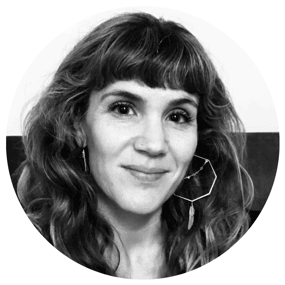
Comic Book Lawyer
Caitlin DiMotta is a partner in the Los Angeles office of Cowan, DeBaets, Abrahams & Sheppard. She represents the interests of artists, writers, personalities, and creators in the television, literary, comic book/graphic novel, and motion picture industries. Her interest in the world of arts and entertainment is grounded in her personal experience, She enjoyed a decade-long career as a professional dancer, performing with national and international dance companies and freelancing for nationally renowned choreographers before embarking up a successful legal career.

Explorer Lawyer
David Concannon is an expert in legal issues affecting exploration. Besides his law firm, he also founded Explorer Consulting, through which he advises clients on “the business of exploration,” including organizing and financing expeditions, producing documentaries for film and television, legal issues, and monetizing intellectual property rights. He has served as general counsel to several organizations, including the Explorers Club and the X-Prize Foundation, and has led numerous expeditions, including those to explore the Titanic and to find and recover the Apollo F-1 rocket engines that launched men to the moon.

Space Lawyer
Laura Montgomery specializes in regulatory space law, with an emphasis on commercial space transportation and the Outer Space Treaties. She spent more than two decades with the Federal Aviation Administration, and served as the manager of the Space Law Branch in the FAA’s Office of the Chief Counsel, and before that, the FAA’s Senior Attorney for Commercial Space Transportation. Laura has published articles on the Outer Space Treaty, human space flight, and launch safety, and also writes science fiction — including some books about lawyers in space.
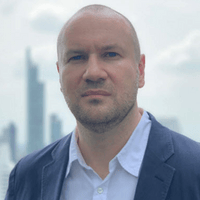
Video Game Lawyer
Zachary Strebeck is a video game and board game lawyer who works with game developers and publishers worldwide. His experience includes trademark registration, copyright registration, intellectual property enforcement, company formation, employee and contractor agreements, game publishing agreements, terms of use, and GDPR-compliance.

Farm Lawyer
Raised on a family farm in Indiana, John Schwarz earned an engineering degree from Tri-State University and a law degree from Indiana University. His passion for farming and helping his community led John to establish his legal practice in 2011, specializing in agricultural law, farm succession planning, real estate law, and more. When he's not practicing, he is an active farmer in Cass County, Indiana, where he cultivates corn, wheat, and soybeans.

International Criminal and Human Rights Attorney
Haydee Dijkstal is a UK barrister at 33 Bedford Row Chambers in London practicing international criminal and human rights law and a US attorney with over a decade of experience in international law. She has represented victims, organizations, governments and those accused of international crimes in cases before various international courts, such as the International Criminal Court, the International Criminal Tribunal for the former Yugoslavia, the Special Court for Sierra Leone, and before UN bodies and other human rights mechanisms. She is also a non-resident senior fellow at the Atlantic Council.

Outdoor Recreation Lawyer
Forrest Merithew is an accomplished lawyer and avid outdoorsperson who has lived and practiced around the country with bar licenses in California, Colorado, and North Carolina. When launching his law firm, Forrest named it Conatus Counsel, based on the Latin word that describes one's natural tendency to strive for success and sustainability. He adheres to this holistic approach when providing services to clients that include brands, businesses, and entrepreneurs, including outdoor recreation, sport, gear, lifestyle, food and beverage, manufacturing and product, clothing and apparel, breweries and restaurants, startups, and tech endeavors. Forrest believes in providing businesses the structure of an in-house general counsel for clients that may not be of size to justify one full-time.

Olympic Cyclist and Bicycle Lawyer
Bob Mionske is a U.S. National Champion, record-setting Olympian, and professional road racing cyclist who later pivoted to the practice of law. Coining the term" bicycle law," Bob was the first attorney in the country with a practice that solely focused on advocating for the rights of amateur racers, bicycle commuters, messengers, and recreational cyclists. He also wrote Bicycling & the Law, the first book on bicycle law since The Road Rights and Liabilities of Wheelmen was published in 1895.
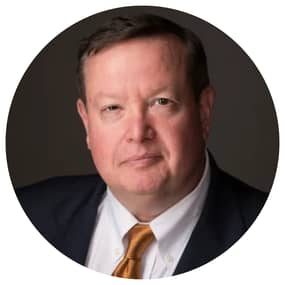
Founder, Johnson Legal PLLC
A former USPTO examiner, Lance Johnson helps innovative clients protect their intellectual property, including inventions, published works, and business identities. In addition to handling patents, trademarks, copyrights, and trade secret matters, he has blazed a trail in the e-commerce world by advising sellers and foreign manufacturers doing business online. That work involves representing clients in complaints and arbitrations involving Amazon, eBay, and other marketplaces, guiding them through allegations of counterfeit sales and defamation.